A campervan battery monitoring system provides far more insight than simply reading voltage. Accurate monitoring of state of charge, current flow and system behaviour lets you manage power properly. It also protects the batteries and helps you avoid costly failures.
Quick answer
In short
A shunt-based battery monitor measures every amp in and out of the battery, so it tracks state of charge far more accurately than a voltmeter. Fit the shunt on the battery negative with nothing bypassing it, set it to your battery type and capacity, and view the data on your phone or a Cerbo GX MK3. A lithium battery’s BMS protects the cells, while the monitor tells you how the bank is being used.
- Shunt on the negative, nothing bypassing it
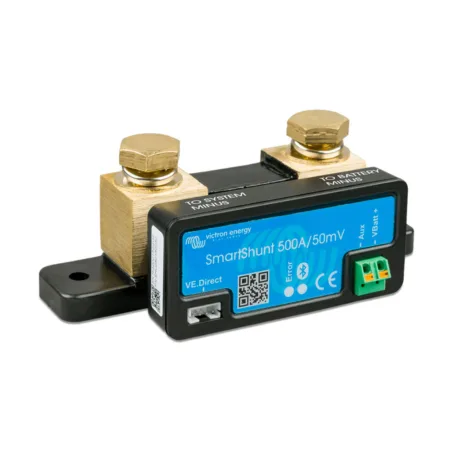
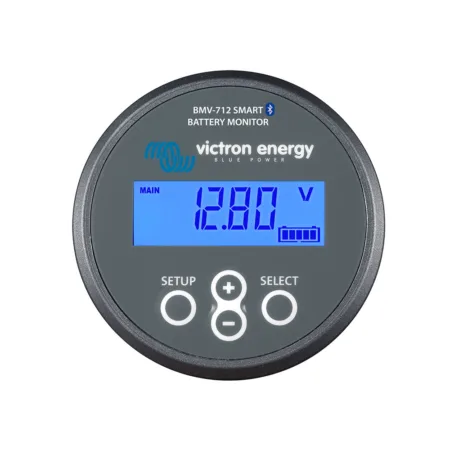
- SmartShunt or BMV-712 for most vans
- We fit Fogstar lithium as standard
- Cerbo GX MK3 for whole-system monitoring
On this page 12 sections
- In short
- Battery monitoring and safety
- Maintenance & longevity of your battery system
- Real-time and remote campervan battery monitoring
- Why Victron for battery monitoring?
- Extending Your Battery’s Lifespan
- Battery Management Systems (BMS)
- Battery Safety
- Battery Performance
- Shunts And The Role They Play In Monitoring
- Victron Energy Monitoring Systems
- Is campervan battery monitoring worth it?
Campervan battery monitoring offers numerous benefits, including efficient power management, enhanced safety, and optimised battery maintenance. With real-time data and alerts, you can make informed decisions, avoid battery-related issues, and extend the lifespan of your battery system.
One of the primary advantages of a battery monitoring system is its ability to optimise power management in a campervan. By monitoring the battery’s state of charge and voltage, users can accurately gauge the remaining capacity and plan their energy consumption accordingly. This prevents over-discharging the batteries, which can lead to irreversible damage and decreased lifespan.
Battery monitoring and safety
Battery monitoring systems play a vital role in the safety of your campervan. By monitoring battery parameters, these systems can detect anomalies and provide early warnings about potential issues such as overcharging, overheating, or voltage fluctuations. This enables you to take prompt action to prevent accidents, electrical failures, or even fires.
Additionally, a battery monitor can safeguard against dangerous situations like overloading. By monitoring the current flow, the system can prevent excessive strain on the battery. That cuts the risk of overheating, electrical fires or damage to sensitive electronic equipment.
Think of your battery monitoring system as your first line of defence against faults. It’s likely that it’ll detect minor issues and notify you via your smartphone or controller. This is a very handy and useful safety tool to have installed within your system.
Maintenance & longevity of your battery system
Maintaining the batteries in a campervan is crucial for their longevity and overall performance.
Battery monitoring systems simplify this process by providing insights into battery health, allowing users to detect early signs of degradation or malfunction. This proactive approach enables campervan owners to take timely action, such as replacing ageing batteries or adjusting charging patterns, before a complete failure occurs.
Additionally, some battery monitoring systems offer historical data analysis, providing trends and patterns related to battery usage. This information can help optimise battery maintenance schedules and ensure the batteries maximum lifespan.

Real-time and remote campervan battery monitoring
Battery monitoring systems offer real-time data visualisation, allowing you to monitor battery performance at a glance. Additionally, with wireless connectivity and smartphone applications, many systems enable remote monitoring and control. So you can keep track of your battery’s status even when you are away from the campervan, and plan your power use.
A service that we at Tiny Build Electrics offer is remote monitoring and adjustment of your system. With the correct components and setup we can remotely access your system to commission, fault find or adjust the system parameters. This service enables you to get the most from your investment.
If you’re interested, drop us a message.

Why Victron for battery monitoring?
We recommend Victron Energy battery monitoring systems. They give accurate monitoring of your battery’s status, better battery performance and a clearer picture of your power consumption.
Here are some steps to help you set up and utilise a Victron Energy battery monitoring system in your campervan:
- 01
Contact Tiny Build Electrics for a 30 minute consultation: to help you choose the appropriate Victron Energy battery monitoring system. Victron offers various monitoring systems suitable for different applications. The system needs to match your campervan’s battery setup and your monitoring requirements. Popular options include the Smartshunt, BMV-700 or BMV-712 Smart Battery Monitors.
- 02
Install the battery monitor
Follow the manufacturer’s instructions to install the battery monitor in your campervan. Typically, this involves connecting the monitor to the battery bank and configuring the appropriate settings.
- 03
Connect the shunt
The battery monitor requires a shunt, which is a precision resistor that measures the current flowing in and out of the battery bank. Connect the shunt to the negative battery terminal, following the installation instructions provided. Nothing must bypass the shunt, as this is critical for accurate data. On our builds, every connection is torqued to the maker’s figure and torque-pen marked.
- 04
Configure the settings
Once you have installed the battery monitor, configure its settings according to your specific battery bank and preferences. This may involve specifying battery type (e.g., lead-acid, lithium), capacity, and other parameters. Tiny Build Electrics can help you configure your settings if you require.
Remember to consult the user manual and resources provided by Victron Energy for detailed instructions specific to your chosen monitoring system. Also make sure the campervan’s electrical system is properly installed and meets the relevant safety standards.
Confused about which monitoring system you require?
Contact us to book a 30 minute consultation.
Extending Your Battery’s Lifespan
The batteries in your tiny build are a significant investment and their lifespan directly impacts the overall cost of ownership. A battery monitoring system plays a vital role in extending battery life by providing crucial information on the batteries overall health. It closely monitors the battery’s parameters and can detect anomalies or irregularities. That allows timely maintenance or replacement, avoiding unexpected breakdowns and costly repairs.
Knowing the cycle life of your battery setup is really handy if you’re living on the road. The number of cycles indicates how many times the battery has gone through a complete discharge and recharge cycle. As a battery goes through more cycles, its performance tends to degrade. Knowing the cycle count helps assess how much life the battery has left before it becomes less effective in storing and delivering electrical energy.
Many leisure battery manufacturers provide warranties that cover a certain number of cycles or a specific time period. Keeping track of the cycle count is essential for validating warranty claims. If a battery fails early, the manufacturer may ask for the cycle count to decide whether the warranty covers it.

Battery Management Systems (BMS)
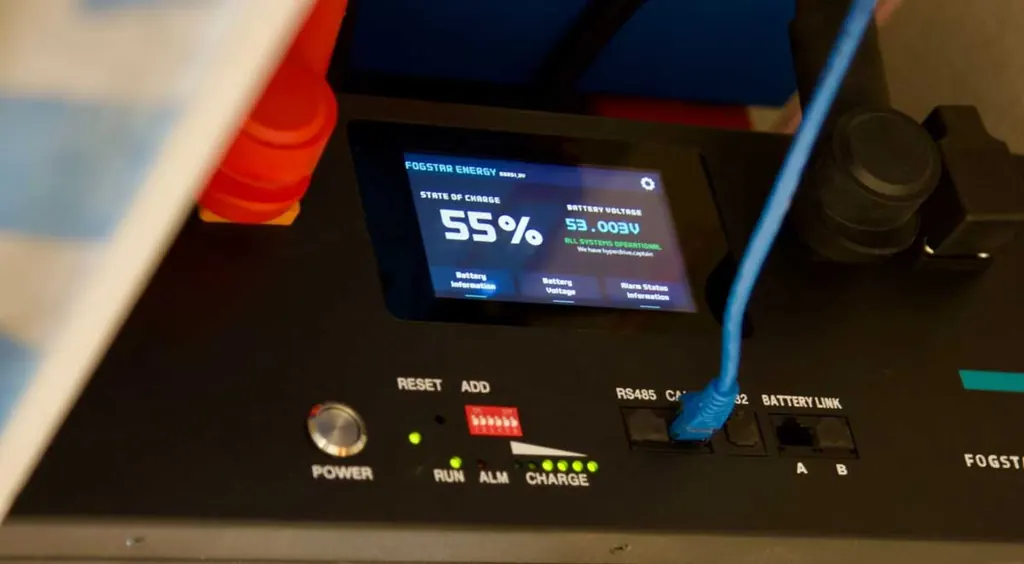
A Battery Management System (BMS) is an electronic system designed to monitor, control, and safeguard the operation of rechargeable, lithium batteries. It serves as the brain of the battery, continuously monitoring its vital parameters, such as voltage, current, temperature, and state of charge (SOC). The BMS utilises this information to make intelligent decisions and optimise battery performance while ensuring its safe and efficient operation.
Battery Safety
Overvoltage and Undervoltage Protection: The BMS prevents the battery from operating outside safe voltage limits. If the voltage goes above the upper threshold or below the lower one, the BMS steps in. For example, it disconnects the load or activates safety relays to prevent further damage.
Overcurrent Protection: The BMS monitors the current flowing in and out of the battery. If the current draw is excessive or there is a short circuit, the BMS disconnects the circuit or limits the current to protect the battery.
Overtemperature Protection: Batteries are sensitive to temperature extremes. The BMS continuously monitors the battery’s temperature and activates cooling systems or triggers alarms if the temperature exceeds safe limits. It ensures that the battery operates within the recommended temperature range, preventing thermal runaway or premature degradation.
Cell Balancing: In multi-cell battery packs, the BMS ensures that each individual cell is balanced in terms of voltage and capacity. It redistributes charge among cells to equalise their levels, maximising the overall battery performance and longevity.
Battery Performance
State of Charge (SoC) Estimation: The BMS provides accurate SoC information by analysing battery voltage, current flow, and other parameters. This information allows users to estimate the remaining battery capacity and plan their power usage accordingly, preventing over-discharge or overcharge scenarios.
Charging Control: The BMS manages the charging process by regulating the charging voltage and current. It ensures that the battery is charged within the manufacturer’s recommended limits, preventing overcharging and optimising charging efficiency.
Discharge Control: The BMS prevents the battery from discharging beyond safe levels, protecting it from damage. It can disconnect the load or activate warning alarms to alert users when the battery reaches a critical discharge level.
Data Logging and Diagnostics: BMS collects and stores data regarding battery performance and events, allowing users to analyse battery behaviour and identify potential issues. It enables informed decision-making and facilitates troubleshooting if any problems arise.

Shunts And The Role They Play In Monitoring
A shunt is an essential component that plays a crucial role in monitoring and protecting an electrical system, including the batteries. Let’s dive into how a shunt works and why it is important.
A shunt is typically a precision resistor that allows a small and known fraction of the total current to pass through it. Measure the voltage drop across the shunt and Ohm’s law (V = I x R) gives you the current flowing through the circuit. Here V is the voltage, I is the current and R is the resistance (the shunt).
In a battery monitoring system, the shunt acts as a current sensor. It provides an accurate measurement of the current flowing in and out of the battery bank. This information is crucial for monitoring the state of charge, evaluating the efficiency of the charging system, and detecting any abnormalities or faults.
The shunt also serves as a protective measure for the electrical system. By monitoring the current, it can help prevent overcharging or excessive discharge of the batteries. So the battery monitor can raise alarms or take action when the current exceeds safe limits, protecting the batteries from overloading or short circuits.

Victron Energy Monitoring Systems
There are several ways to view the data from your battery monitor.
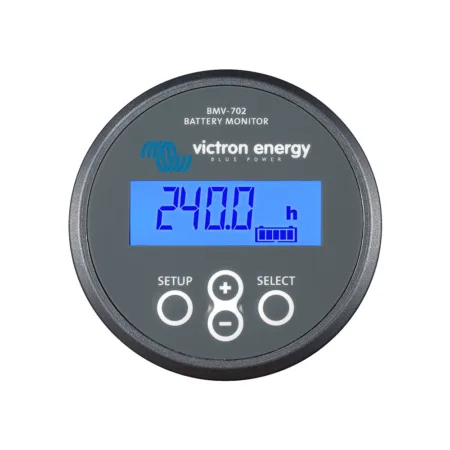
Victron BMV-700/702/712: These battery monitoring systems are part of the Victron BMV series. They provide real-time information about battery voltage, current, state of charge (SOC), and time remaining. They have a built-in battery monitor and work with various types of batteries, including lead-acid, lithium-ion, and more.
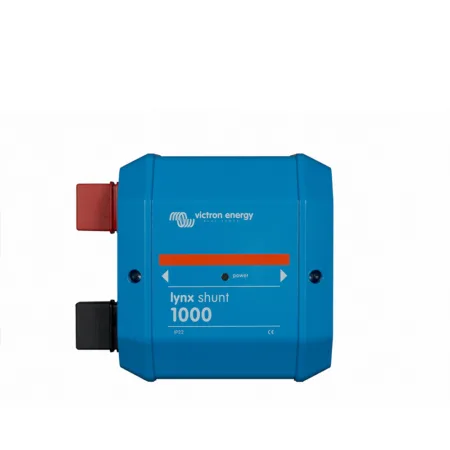
Victron Lynx Shunt: The Lynx Shunt suits larger battery systems or installations with multiple battery banks. It connects to the Victron Lynx Distributor and provides detailed information on current, voltage, SOC, and other parameters for each individual battery bank.
Victron SmartShunt: The SmartShunt is a compact battery monitoring device that connects to a smartphone or tablet via Bluetooth. It provides real-time information on battery voltage, current, SOC, and power consumption. You can see the data in the VictronConnect app, which makes it easy to check battery status remotely.
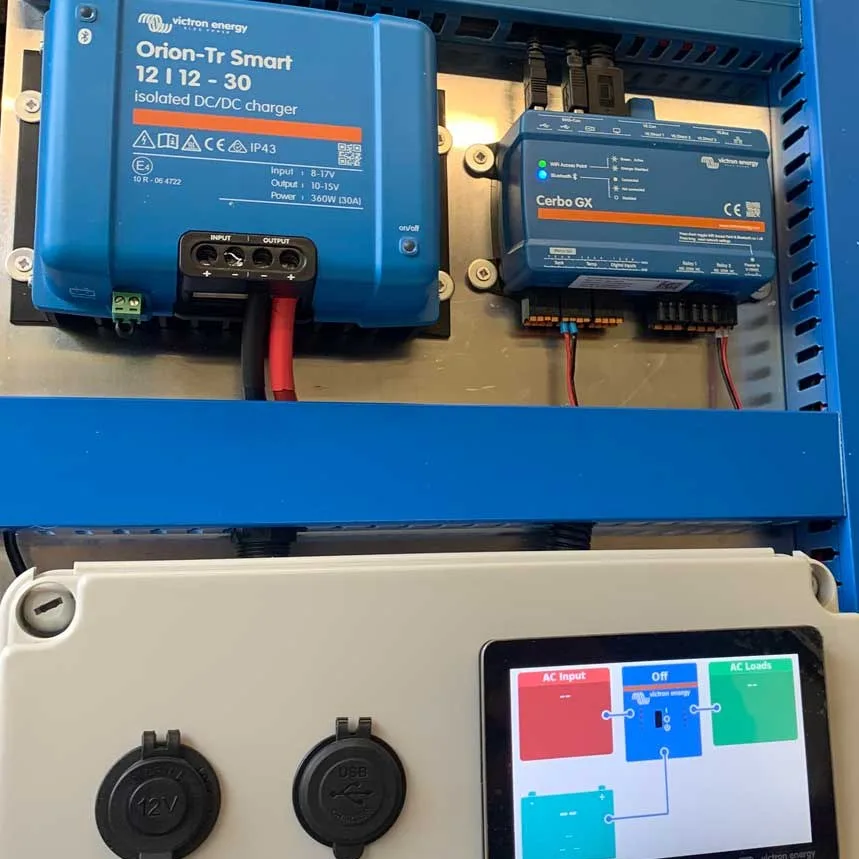
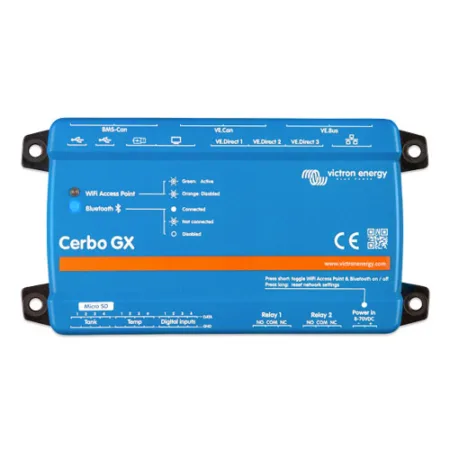
Victron Cerbo GX MK3: The Cerbo GX MK3 acts as a central hub for monitoring and controlling different aspects of an energy system. It features a touch-screen display and an intuitive user interface that allows you to access and configure various system parameters. It also provides real-time monitoring of energy production, consumption, battery status, and other relevant data.
Is campervan battery monitoring worth it?
Campervan battery monitoring is a valuable addition to any van, providing enhanced safety, optimised power usage, and peace of mind.
By monitoring critical battery parameters, campers can avoid potential issues, maximise battery life, and reduce the risk of accidents. Additionally, the ability to remotely monitor and control the battery system offers convenience and flexibility during camping trips.
Campervan battery monitoring FAQs
Do I need a battery monitor in a campervan?
Yes, if you want to know your real state of charge. A shunt-based monitor counts every amp in and out, which is far more accurate than reading the battery voltage.
Where does the shunt go?
On the battery negative, with nothing connected to the battery side of it, so every amp passes through it.
Is a BMS the same as a battery monitor?
No. A lithium battery’s BMS protects the cells. The monitor tells you how the bank is being used.
About the reviewer: Tom Alderdice
Tom holds the 18th Edition (BS 7671) and inspection and testing qualifications, plus NCC training in caravan and motorhome electrics.
Tiny Build Electrics is an Authorised Victron Energy Installer. See Tom’s full qualifications