In short
Induction cooking in a campervan works, off-grid and full time, if the electrical system is designed around it. The hob’s peak load drives everything: a pure sine wave inverter with headroom, lithium batteries that hold their voltage under heavy current, and enough solar and alternator charging to put the energy back.
- 1600W peak from a two-burner hob
- Victron MultiPlus-II 12V 3000VA
- Lithium for heavy, fast discharge
- 800W of solar plus an Orion XS 50
On this page 10 sections
- In short
- Why choose induction cooking in a campervan?
- Living with induction off-grid
- Induction changes the entire electrical design
- Inverter size for induction cooking in a campervan
- Battery choice and capacity for induction cooking
- Charging becomes critical
- Electrical system limits you learn fast
- So, can you realistically run a campervan induction hob?
- Final thoughts
I live in my self converted van, full time. For the entire time, induction cooking in a campervan has been my only way of cooking, on a Vango Sizzle induction hob. No gas. No compromise “backup” stove (Well, other than a small backpacking stove… which I think I have only used once one Christmas as an extra burner). Just induction as the primary method of cooking day in, day out, and all off-grid.
One of the questions that comes up constantly is whether induction cooking in a campervan is actually realistic, or whether it’s one of those ideas that sounds great online but falls apart in the real world. You’ll find plenty of content saying it’s easy, and just as much saying it’s completely impractical. In reality, it sits somewhere between those two extremes.
This case study isn’t about whether a campervan induction hob can work. It’s about what it actually takes to make it work properly, reliably, and safely without constantly tripping systems or overspending in the wrong places.
Why choose induction cooking in a campervan?
I chose induction cooking in my van for a few key reasons. During the conversion, the idea of installing a gas system myself felt both daunting and slightly intimidating from a safety perspective. Induction offered a cleaner, simpler alternative with fewer additional components and less ongoing risk to manage.
I was also drawn to the idea of being as energy independent as possible. My plan was to live off-grid for extended periods, using solar power to handle everyday essentials, including frying my eggs for breakfast. Induction fit neatly into that vision of an all electric, self-sufficient setup.
And, if I’m honest, part of the appeal was purely technical. I’m a self-confessed nerd, and the prospect of using what was, at the time, considered the cutting edge of van-life electrics was exciting. Building a system that pushed the limits of what could realistically be powered from batteries and solar was as much a motivation as the practical benefits.
Living with induction off-grid
Cooking off-grid in a campervan changes your relationship with power. When your main cooking method is electric, you stop thinking about electricity as something passive in the background and start treating it as a core utility, just like water or heating.
Real cooking behaviour looks nothing like the neat calculations you see online. I’m not running the hob at full power for an hour straight. Most use is short, sharp bursts; boiling water, frying, reheating, simmering. High power for a few minutes, then backing off once the desired temperature has been reached. It’s dynamic and inconsistent, and that’s exactly why induction is so demanding on an off-grid power system.
As Tom explained to me in my Electrical consultation, the key consideration is the peak load.
With 800 watts per burner (max power 1600W) The Vango Sizzle is capable of pulling some serious power, very quickly. Even if the average use is modest, the system must always be ready for those high demand moments. That’s where most campervan electrical systems fall short. They’re built for lighting, fridges and USB charging, not for frying eggs.
Induction changes the entire electrical design
The moment you decide to build a campervan induction hob electrical system, everything shifts.
You’re no longer designing for small continuous loads. You’re designing for rapid, high current draw and a system that needs to respond instantly without voltage sag, inverter shutdowns, or thermal issues.
The biggest mistake people make is thinking induction is just another appliance. It isn’t. It becomes one of the primary drivers of system design.
Inverter sizing, battery selection, charging strategy, cable specification and ventilation all revolve around it. If the system isn’t built with induction in mind from the start, you end up chasing problems later.
Inverter size for induction cooking in a campervan
The conversation around induction often focuses too heavily on maximum wattage, but real-world use is about behaviour, not just numbers.
Induction hobs cycle power. They ramp up, stabilise, pulse and reduce depending on heat settings. That means the electrical system must cope with continuous variation, not just a single load figure. That’s why Induction is unforgiving when it comes to inverter quality and capacity. It requires a pure sine wave inverter, and not a small one. Our campervan inverter guide covers how we size them.
It isn’t just about matching the rated wattage of the hob. It’s about handling peak load and maintaining stable output under rapid changes in demand. Undersized inverters spend their lives running at the edge of their limits, which leads to heat, inefficiency and shutdowns.
For induction cooking campervan setups, inverter headroom matters. The system must comfortably supply high load moments without feeling stressed. If it feels like the inverter is working hard, it’s undersized. For my system, Tom specified a Victron Energy MultiPlus-II 12V 3000VA, which allows plenty of room for the hobs peak load. And extra in case I leave my laptop plugged in at the same time too.
Battery choice and capacity for induction cooking
Battery choice is where induction either becomes viable or completely impractical. The discharge demands are high when cooking. That immediately pushes the system toward lithium leisure batteries. Not because they’re fashionable, but because they handle high discharge rates, recover quickly and maintain stable voltage under load.
Lead-acid systems can technically run induction, but they struggle with voltage sag and lifecycle damage under repeated high current draw. Over time, performance drops, and so will reliability.
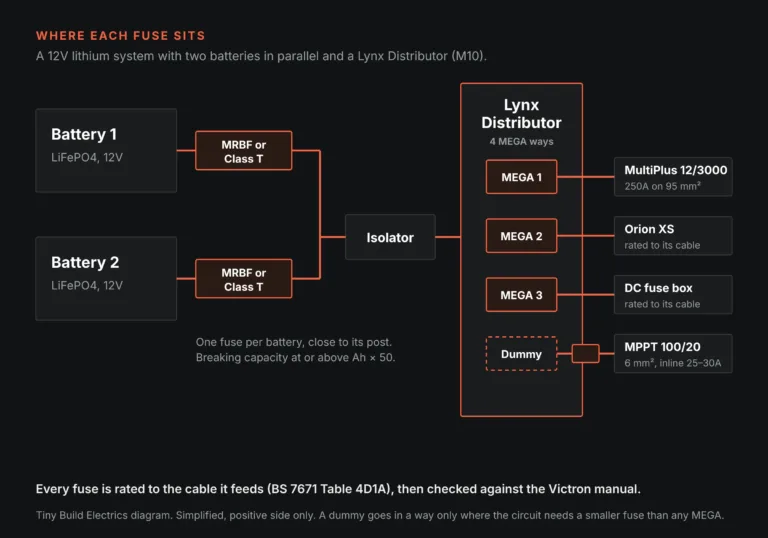
With lithium, the system behaves predictably. That stability is what makes off-grid cooking campervan setups realistic rather than frustrating. Size wise, Tom did spec two 200Ah Victron batteries for my system, for 400Ah total. However, batteries are not cheap so I went for just the one initially, with the plan to get the other once I saved up enough.
But, that never happened; because, well it works! Now this is because I am very diligent at managing my power consumption, and in truth, doubling the capacity of my battery bank would be a very welcome upgrade at some point, especially now the prices of LiFePO4 leisure batteries have come down. But when your cooking is electric, battery capacity for induction cooking isn’t just about size. It’s about how quickly that energy can be replaced…
Charging becomes critical
Running an induction hob shifts the pressure onto charging. Solar alone can work in the right conditions, but across a full year it can’t keep up on its own 100% of the time. Alternator charging becomes more important, and energy management becomes a daily habit rather than an afterthought.
That’s the real constraint in off-grid cooking campervan systems, not whether you can cook once, but whether you can keep cooking every day without chasing charge.
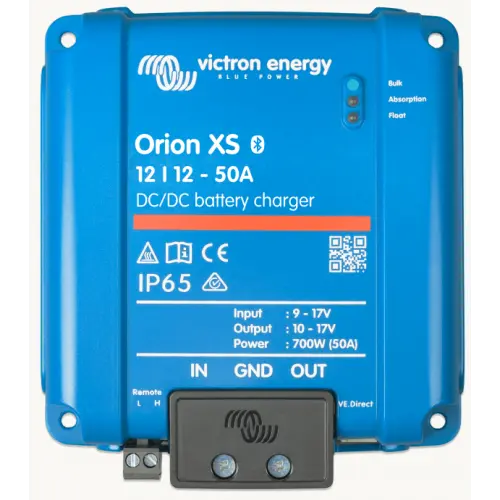
Our solution? As much solar as we could fit on the roof; 800W to be exact. And, thanks to Charlie, I have recently upgraded to an Orion XS 50 DC-DC charger (The only part of the van I did not install myself I might add).
Electrical system limits you learn fast
Living with induction teaches you the limits of your system very quickly. You check the battery percentage before cooking. The weather starts to matter, because it changes how much charge comes in. And you understand heat loads inside electrical spaces and why ventilation around the inverter matters.
None of this is dramatic, because TBE made me well aware of what I should expect thanks to their installation guide. Induction cooking just makes the electrical system visible. It no longer is just background infrastructure, it’s something you actively interact with.
So, can you realistically run a campervan induction hob?
Yes. Absolutely.
But only when the system is designed around it. Thankfully, it was a major consideration Tom made when designing my system.
Trying to retrofit induction into a lightweight leisure setup is where the problems begin. Voltage drop, inverter trips, undersized cabling, inconsistent charging and battery stress all start to appear. Not because induction cooking off-grid is flawed, but because the system wasn’t designed for that type of load.
When it is designed properly, induction becomes one of the most convenient and efficient ways to cook off-grid safely. No gas storage, fast heating, clean operation and simple day-to-day use.
Final thoughts
Induction cooking campervan setups aren’t about proving it can be done. They’re about understanding what it demands from the electrical system and designing accordingly.
It requires lithium leisure batteries, a properly sized pure sine wave inverter, strong charging input and an honest understanding of real-world power usage. It also requires accepting that peak loads will shape the entire system, not just one appliance.
For full-time van life, it’s been one of the most worthwhile decisions I’ve made. Cooking is faster, cleaner and simpler, and my system feels built for purpose rather than stretched. I have even been able to add an air fryer to my cooking arsenal, thanks to the capability of my system.
If you’re considering induction, or air frying in your campervan and want to know what it would actually take to run it reliably, I would highly recommend reaching out to the guys at Tiny Build Electrics. You can book a free 30-minute call with Tom. Induction isn’t difficult, but it is unforgiving if guessed, and in a moving, off-grid environment, guesswork is where systems fail.
Induction cooking in a campervan FAQs
Can you run an induction hob off-grid in a campervan?
Yes, if the system is designed around it. The hob’s peak load sets the inverter size, the battery choice and the charging, so plan for induction from the start.
What size inverter do you need for induction cooking?
A pure sine wave inverter with plenty of headroom over the hob’s peak load. This two-burner hob peaks at 1600W, and the van runs a Victron MultiPlus-II 12V 3000VA.
Will solar alone keep up with induction cooking?
Not all year. In this van, 800W of solar does most of the work, and an Orion XS 50 DC-DC charger tops up from the alternator.
About the reviewer: Tom Alderdice
Tom holds the 18th Edition (BS 7671) and inspection and testing qualifications, plus NCC training in caravan and motorhome electrics.
Tiny Build Electrics is an Authorised Victron Energy Installer. See Tom’s full qualifications