Choosing the right Type A RCD for a campervan matters more than ever. Recent updates to the BS7671 wiring regulations mean that choosing the correct RCD for a campervan electrical system is now a key safety decision. In particular, the decline of Type AC RCDs and the shift toward Type A protection has major implications for safety and compliance.
British Standard 7671 wiring regulations state: ’RCD Type AC shall only be used to service fixed equipment where it is known that the loads current contains no DC components’
Quick answer
In short
Type A is the minimum for a campervan RCD, and it must be double pole. Inverters, chargers and other DC electronics can leak DC into the AC side, and that can stop a Type AC RCD from tripping. BS 7671 only allows Type AC where you know the load current contains no DC components.
- Type A, double pole, in the van’s distribution board
- Type AC only where loads have no DC components
- Cheap wholesale units often ship with Type AC
- Our consumer units come with Type A
On this page 5 sections
Both self-builders and professional builders need to follow this regulation. Otherwise, they risk using or supplying the wrong components, and that can leave an RCD unable to trip under fault conditions.
This article covers the type of RCD you should use in your campervan’s electrical installation. The type of RCD you choose has a direct effect on the safety of your system, so this guide walks you through the choice.
Types of campervan RCD
There are two main types of RCDs
- 01
Type AC
This type of RCD protects against AC fault currents only. It detects a difference between the current in the line (live) and neutral conductors and disconnects the circuit. A fault to earth may cause that difference. You will commonly find Type AC RCDs in domestic and similar installations where the risk of DC faults is low.
- 02
Type A
This type of RCD protects against both AC and DC fault currents. It detects a difference between the current in the line and neutral conductors and disconnects the circuit. It also trips when a DC component causes a fault current to earth. You will commonly find Type A RCDs in industrial and commercial installations where the risk of DC faults is higher.
Other RCD types
In addition to these two main types, there are also other types of RCDs available, including:
- 03
Type B
This type of RCD protects against AC, pulsating DC and smooth DC fault currents. You will commonly find it in medical locations and locations where the electrical supply is generated from a renewable energy source.
- 04
Type F
This type of RCD protects against AC and DC fault currents, including high-frequency DC residual currents. You will commonly find it in locations with electronic equipment and installations with frequency converters.
- 05
Type B+
This type of RCD gives additional protection against DC fault currents, including those caused by high-frequency ripple currents. You will commonly find it in installations with electronic equipment and renewable energy sources.

Important
If you buy a consumer unit from a wholesaler, it may well come with a Type AC RCD. Why? It is the cheapest RCD available. However, it does not give the right level of protection for a system containing DC electronics.
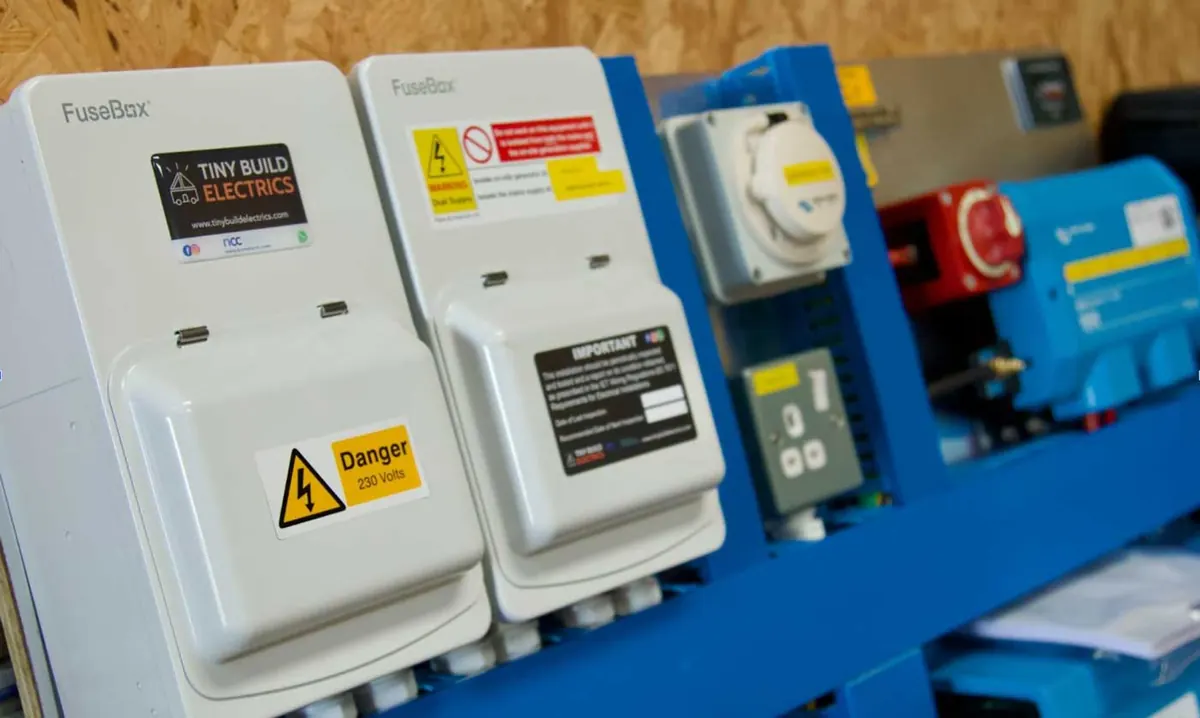
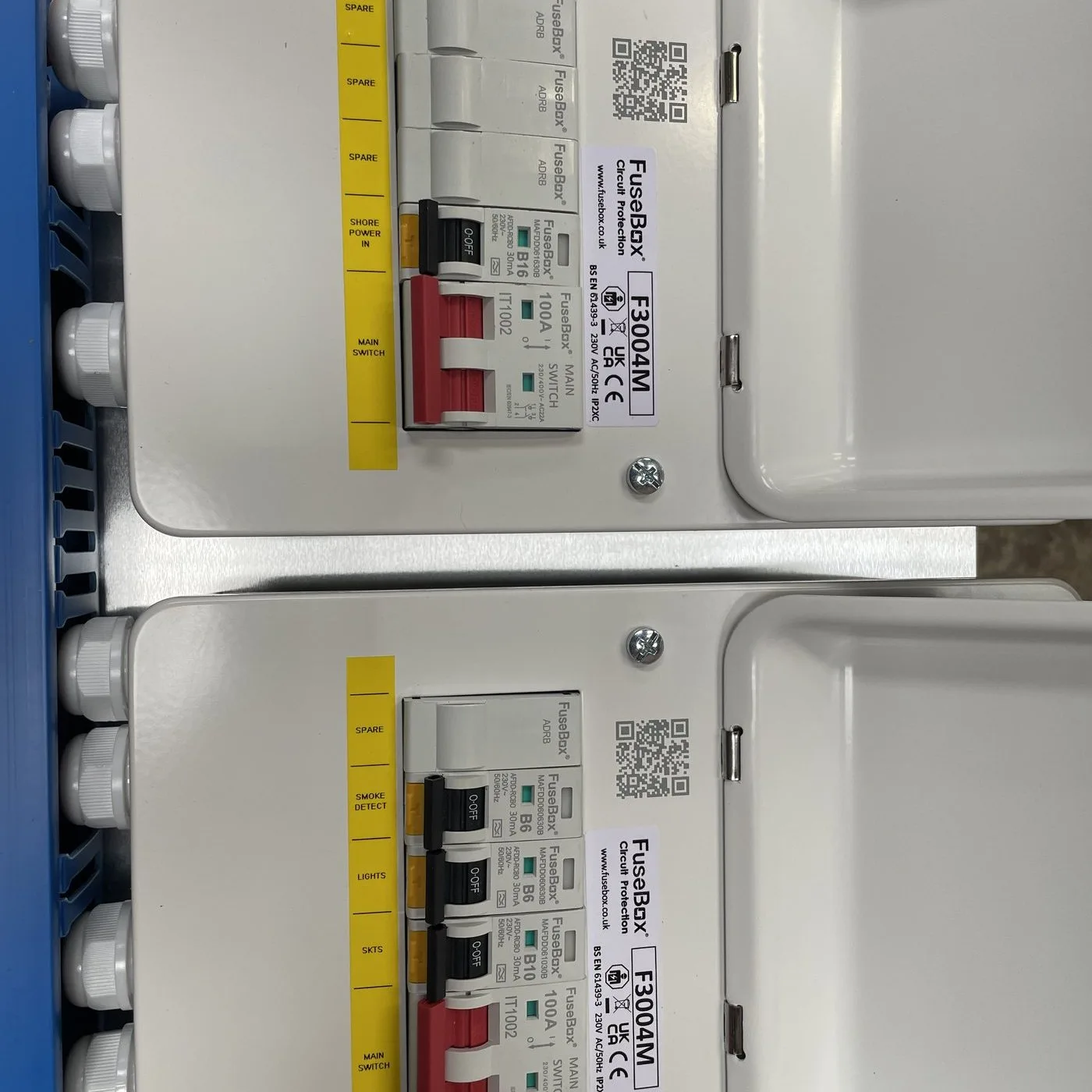
If you buy a consumer unit for your campervan from the Tiny Build Electrics store, it comes with the correct Type A RCD.

How a campervan RCD operates
A residual current device constantly measures the current balance between the line and neutral conductors. The device will open its contacts (trip) if it detects an imbalance between the two conductors.
In a safe, working system the supply and return currents balance, so no current leaks to earth. RCD’s are designed to prevent electrocution by detecting the earth leakage and disconnecting the supply before it causes any harm.
An RCD detects this leakage current, which can be far smaller than the several amperes needed to trip a circuit breaker or fuse. RCDs are intended to operate within 25 to 40 milliseconds. That is faster than an electric shock takes to drive the heart into ventricular fibrillation, which is the most common cause of death from electric shock. A safe system is a system that protects against short-circuit, overload and earth leakage currents.

Why Type AC RCD’s are becoming obsolete
Type AC RCDs worked well in the past. Back then, the loads behind the RCD were simple resistive loads with very little electronics. However, as time has gone on systems are becoming ever more sophisticated with a larger amount of electronics present. Loads with DC electronics inside them tend to leak DC back down the line into the AC side, and then on into the RCD.
This DC current can reach a Type AC RCD and ‘stun’ it. As a result, it may not trip when an earth fault occurs. As that’s what an RCD is designed to do, this causes a massive issue. This therefore means the fault will not clear and cause damage to the installation and worse, the user.
So a Type AC RCD no longer suits many installations, especially campervans with inverters, battery chargers and other DC electronics.

Which campervan RCD do I need?
A Type A double pole RCD is the minimum in your campervan’s distribution board. Type A RCDs detect alternating current (AC) residual currents with a sinusoidal waveform. For example, electronic devices with switching power supplies and equipment with variable speed drives produce them. These loads can also produce harmonic currents that a Type AC RCD may struggle to detect. That makes a Type A RCD an important safety measure in any electrical system containing DC electronics.
Minimum
Type A
Detects AC and pulsating DC residual current, which chargers, inverters and LED drivers can produce.
Not for vans
Type AC
Detects AC residual current only. BS 7671 limits it to loads known to have no DC components.
Campervan RCD FAQs
Which RCD do I need for a campervan?
A Type A, double pole, 30mA RCD as a minimum. Chargers, inverters and other electronics can produce DC residual current that blinds a Type AC device.
Why is a Type AC RCD not suitable?
BS 7671 only allows Type AC where the load current is known to contain no DC components. A van with a charger, inverter or LED drivers doesn’t meet that.
Does an RCD replace an MCB?
No. An RCD detects earth leakage and an MCB protects against overcurrent. An RCBO does both, which is why we fit double-pole RCBOs.
About the reviewer: Tom Alderdice
Tom holds the 18th Edition (BS 7671) and inspection and testing qualifications, plus NCC training in caravan and motorhome electrics.
Tiny Build Electrics is an Authorised Victron Energy Installer. See Tom’s full qualifications