When designing and installing an electrical system in a campervan safety should be at the forefront of everything we do. From correctly sized fuses and cables to correctly terminated outlets this all comes together to create something usable and safe.

When I think of safety in and around campervan electrical systems, my mind instantly diverts to earthing and bonding. These are key safety features and are fundamental to a correctly operating and safe electrical system.

In regard to campervan electrical installations, there are 3 types of earthing worth noting, namely:

Earth is a direct connection via a copper cable to the Earth. This is achieved by a copper rod or copper tape driven into the ground. Depending on the building this could be a old water pipe or even a metal steel joist.

Chassis earth is a connection made to the metal work of a vehicle or boat. It could also be the electrical casing of large electrical equipment.

Ground is a common reference point in a circuit to which voltages are measured. As a result, a voltage may be above ground (positive) or below ground (negative).
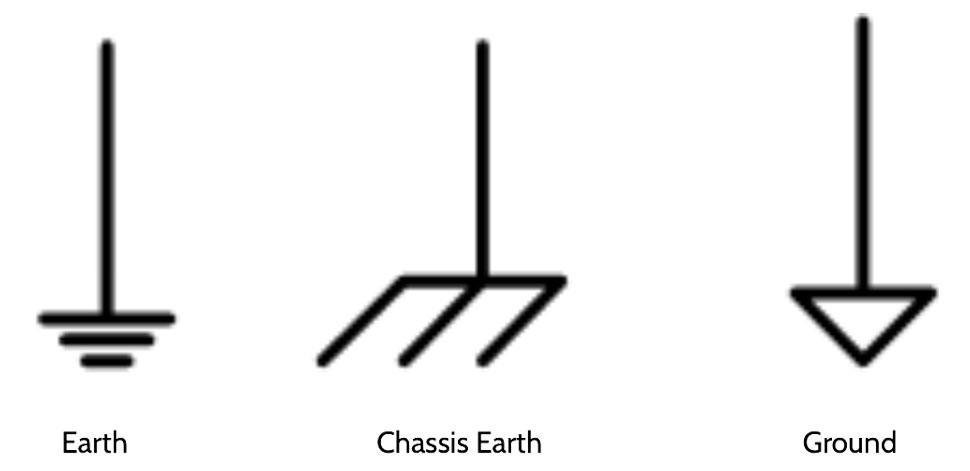
Earth Chasis

What is the difference between earthing and bonding in our campervan’s electrical system?

Earthing and bonding are two distinct concepts used in electrical and safety systems, primarily to prevent electrical hazards and ensure the safety of individuals and equipment. They serve different purposes but are closely related.


Earthing (Grounding):

Purpose: Earthing, also known as grounding in the USA, is primarily intended to provide a safe path for electrical fault currents to dissipate into the earthing conductor, thereby preventing electrical shocks, fires, and equipment damage. For your campervans electrical installation you do not need to worry about earthing, this page purely exists to give understanding and context to the rest of the guide.

Function: It involves connecting metal parts of electrical equipment and systems (like appliances, electrical panels, machines, etc.) to the earth or a ground electrode (a metal rod buried in the ground).

Key Components: Grounding electrodes, grounding conductors, and grounding electrodes (ground rods, plates, etc.) are essential components of an earthing system.

Safety: Earthing ensures that if there is a fault in an electrical device, the current will flow into the ground instead of passing through people or objects, reducing the risk of electrical shock or fire.

I know what you’re thinking: how can we earth a campervan that sits on four rubber tyres? Well, if the van is
disconnected from the grid then its not technically ‘earthed’. In this instance we rely on the metal structure
of the van having enough mass to pull the electrical fault to the van chassis and trip the circuit breaker or
blow the fuse, there by disconnecting the supply.

That said, once we’ve connected our campervan to shore power either on a campsite or aire, the supply will
be ‘earthed’ by a copper rod connected to the Main Earthing Terminal of the hook up point that you plug into,
which will in turn ‘earth’ the campervan.
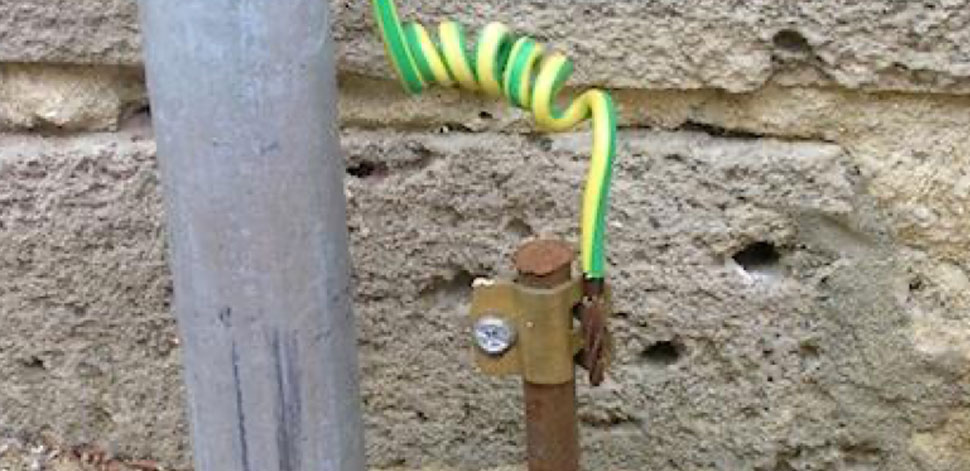
Campervan powerA copper rod buried into the ground creating a ‘earth’ or ‘ground’ connected to a motorhome hook up point via a green/yellow cable. You may see these on campsites or aires where you plug your campervan into shore power.

What is bonding and why is it so important in our campervan’s electrical system?

Purpose: Bonding is primarily used to establish an electrical connection between various conductive components or structures which have the potential to become ‘live’.

Function: It involves connecting metal objects and structures together to ensure they are at the same electrical potential. This prevents differences in voltage between them, reducing the risk of electrical discharge, sparking, or static electricity buildup.

Key Components: Bonding conductors and clamps or connectors are used to create electrical connections between conductive materials.

Safety: Bonding is crucial in camper vans, motorhomes and boats. Every conductive parts needs to be bonded to achieve an ‘equipotential zone’.

Equipotential Zone: Equipotential zones are often used to create safe areas in electrical systems. Especially in AC systems. For example, the surface of a conducting material like the metal bodywork of a campervan can be an equipotential surface to prevent electric shocks to users. In such cases, any point on the casing has the same electric potential, so there is no potential difference to drive current through a person touching it.

A faraday cage is a great example of a equipotential zone.


Exposed conductive parts in a campervan’s electrical system

BS 7671 defines an exposed conductive part as a conductive part of equipment which can be touched and which is not normally live, but which can become live under fault conditions.

In essence, an exposed conductive part is any metallic part of an appliance or equipment accessible to touch and liable to become live if a fault occurs within that appliance or equipment. Such equipment in a campervan or motorhome includes metal consumer units, water heaters, and microwave ovens.

BS 7671 requires that all exposed conductive parts are ‘earthed.’ That is, they must be connected to the installation main earthing terminal, and this is achieved by ensuring a connection to each with a circuit protective conductor (technical term for an earth wire).

Earth TerminalA main earth terminal (MET) within a 230V distribution board housing two 4mm bonding cables. One chassis, the other for gas pipework.

Extraneous conductive parts in a camper vans electrical system

BS 7671 defines an extraneous conductive part as a conductive part liable to introduce a potential, generally earth potential, and not forming part of the electrical installation. In essence an extraneous conductive part is any metallic part entering the installation from the ground.

The parts considered extraneous in a campervan or motorhome are gas installation pipes and the chassis.

BS 7671 requires that all extraneous conductive parts are ‘bonded.’ That is, they must be connected to the installation main earthing terminal, and this is achieved by ensuring a connection to each with an ‘equipotential bonding conductor,’ or simply a protective bonding conductor.

Regulation 411.3.1.2 considers an extraneous-conductive-part as a conductive part liable to introduce ‘a dangerous potential difference’.

Gas Pipe Bonding
Protective Equipotential Bonding

In a campervan, a chassis ground (often referred to as chassis earth) is a crucial electrical connection to ensure the safety and proper functioning of various electrical and electronic components. Here’s how it works in a campervan:

Principle: The concept of grounding is based on connecting various metal parts and electrical components of a vehicle to the vehicle’s chassis, which is typically made of metal. The chassis, in turn, is connected to the earth or ground through a thick, low-resistance wire.

Safety: Chassis grounding is primarily a safety feature. In the event of an electrical fault, such as a short circuit, the chassis ground provides a low-resistance path for electrical current to flow safely into the ground, operating the overcurrent protective device, reducing the risk of electrical shocks or fires.

Electrical System Reference: In a campervan’s electrical system, many devices and components require a reference point for voltage measurements and electrical potential. The chassis ground serves as this reference point. All electrical components are connected to the chassis ground to establish a common electrical reference.

To establish a proper chassis ground for your campervan’s electrical system:

  • A dedicated wire is connected from a grounding point (typically a metal frame or body part) to a the main negative busbar of the DC system and main earth terminal of the 230V system. This bonds both the DC and AC system to the chassis of the campervan.
  • Remember to remove the paint where you plan to make your connection, the paint will act as a insulator and may impede the connection.
  • Some electrical components and devices within the campervan will need to have their metallic bodies connected to the chassis ground. Check the manufactures instructions to confirm which devices these are.
  • Properly-sized wires and connectors should be used to ensure a low-resistance path for electrical current.
  • Some devices require their metallic bodies to be grounded via their chassis ground terminal. For example a Victron Energy Multiplus Inverter Charger requires a dedicated cable to be ran from its metal work to the main negative busbar, which in turn is bonded to the chassis of the campervan. You will find all this information on our detailed wiring diagram (schematic).
Wiring DiagramOur detailed Tiny Build Electrics wiring diagram showing a 16mm2 protective earth (PE) making its way to the main negative busbar.

Keep in mind that the specifics of chassis grounding can vary depending on the vehicle’s make and model, as well as the electrical system design of the campervan. It’s essential to follow manufacturer guidelines and, if in doubt, consult with us at Tiny Build Electrics to ensure a safe and effective chassis grounding system in your campervan.

Neutral to Earth Link in Campervan Electrical Systems

An AC power source that’s feeding a campervan’s electrical system needs to have a neutral-to-earth link (MEN link) so that an Residual Current Device (RCD) can operate correctly. This is the case for the grid, but also if the AC source is a generator or an inverter.

But when combination inverter/charger units are used such has a Victron Energy Multiplus, the MEN link is less straightforward. The inverter/charger unit has two different modes of operation

AC Input relayEarth relay open whilst connected to shore power.

The inverter/charger is in charger mode and/or feed-through mode:

When the campervan electrical system is connected to shore power the AC input relay, within the inverter, is closed and at the same time, the earth relay is open (see diagram below).

The AC output system relies on the AC power supply to provide the neutral-to-earth link. This link is needed so the RCD in the AC output circuit is operational. Earth relay AC input relay.

Need help understanding how an RCD works?

Check our detailed guide here

Fuse DiagramEarth relay closed when in inverter mode.

The Inverter/charger is in inverter mode:

When the shore power supply is disconnected from the campervan, or has tripped, the AC input relay opens. When the AC input relay is open, the installation does not have a neutral-to-earth link anymore.

This is why at the same time the earth relay is closed. As soon as the earth relay closes the inverter/charger has made an internal neutral-to-earth link. This link is needed so the RCD in the AC output circuit is operational.

Inverter

FAQ’s

Do I need to bond the chassis of my van?

Yes. We need to bond every accessible conductive part of the vehicle so that they are of the
same potential. Our Tiny Build Electrics personalised wiring diagrams (schematics) clearly show each
bonding point to make it easy for the installer.

If a fault occurs and the fault current is sent to my van chassis, could this damage the vehicles
electronics?

Whilst we can’t guarantee that damage to vehicle electronics won’t take place under fault conditions, it’s
worth understanding that an electrical fault is better passing to the van chassis than via a human being to
earth which could result in injury or worse, death. The result of the fault being pulled to the van chassis
means the protective devices should trip or blow, disconnecting the supply and making the system safe.

Do I need to bond my chassis if I have a DC only system?

Yes. Irrespective of which system you decide to install, you must make every effort to bond the negative to
the chassis of your campervan. Our schematics make this very easy by showing you exactly what size cable
you require as well as exactly where the cables need terminating.

What if the body of my campervan or motorhome is fibreglass?

This is why we use the term ‘chassis ground’. The chassis of your vehicle will more than likely be steel, a
extraneous conductive part. Therefore every effort should be made to bond that part of the vehicle.

Do I need to bond my gas pipe to my main earth terminal?

BS 7671 – 721.411.3.1.2 Requires “that in each installation main protective bonding conductors complying with Chapter 54 shall connect to the main earthing terminal extraneous-conductive-parts including (ii) Gas installation pipes”
A topic which has sparked a lot of conflicting opinions is the use of DC isolators within solar installations, specifically between the PV panels and the electronic equipment.

In this guide we will take a look at the information provided to us by the wiring regulations and IET code of practices to see if we can de-bunk the opinions flying around on the ever opinionated social media platforms.


What the British Standard 7671 Wiring Regulations say regarding DC Isolation?

712.537 Isolation and switching

712.537.2 Isolation

712.537.2.101 To allow maintenance and replacement of the inverter, means of isolating the inverter from the DC side and the AC side shall be provided.

712.537.2.2 Devices for isolation

712.537.2.2.101 A switch disconnector or a circuit-breaker suitable for isolation shall be provided on the DC side of the inverter.

Our tiny build systems and components are slightly different to the above mentioned by BS7671. That’s because these regulations are aimed specifically towards PV installations in domestic, commercial and industrial applications that use a solar inverter to convert the DC into AC straight away rather than a solar charge controller and battery setup.

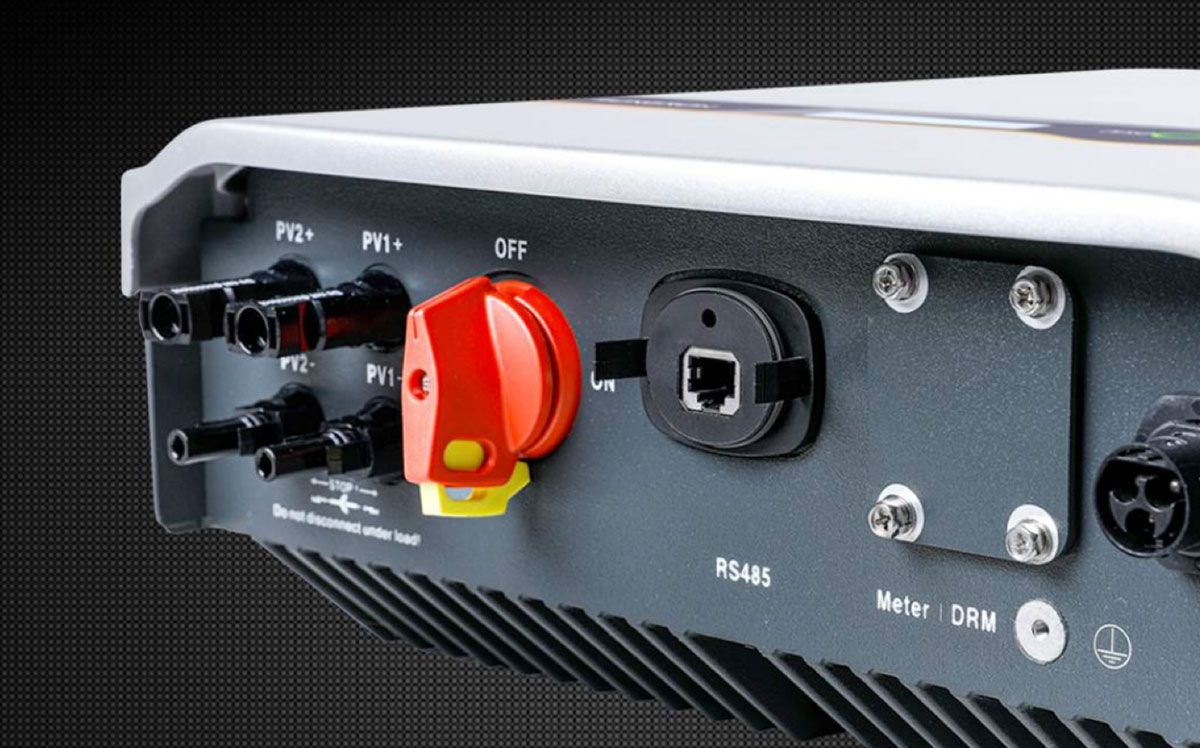
A solar inverter is not to be confused with the type of inverters we commonly use to supply 230V items in our campervans. A Solar Inverter is a device that converts direct current (DC) electricity, which is what a solar panel generates, to alternating current (AC) electricity, which the electrical grid uses. These units often have double pole isolators built into them, therefore mitigating the requirement for a external DC isolator.

Due to the regulations not mentioning anything regarding MPPT Solar Charge Controllers (DC/DC) it therefore leaves us with no other choice as designers than to assume worst case scenario and to include a means of isolation.

Solar InverterA Solar Inverter with built in DC Isolator. Commonly used in Domestic applications.
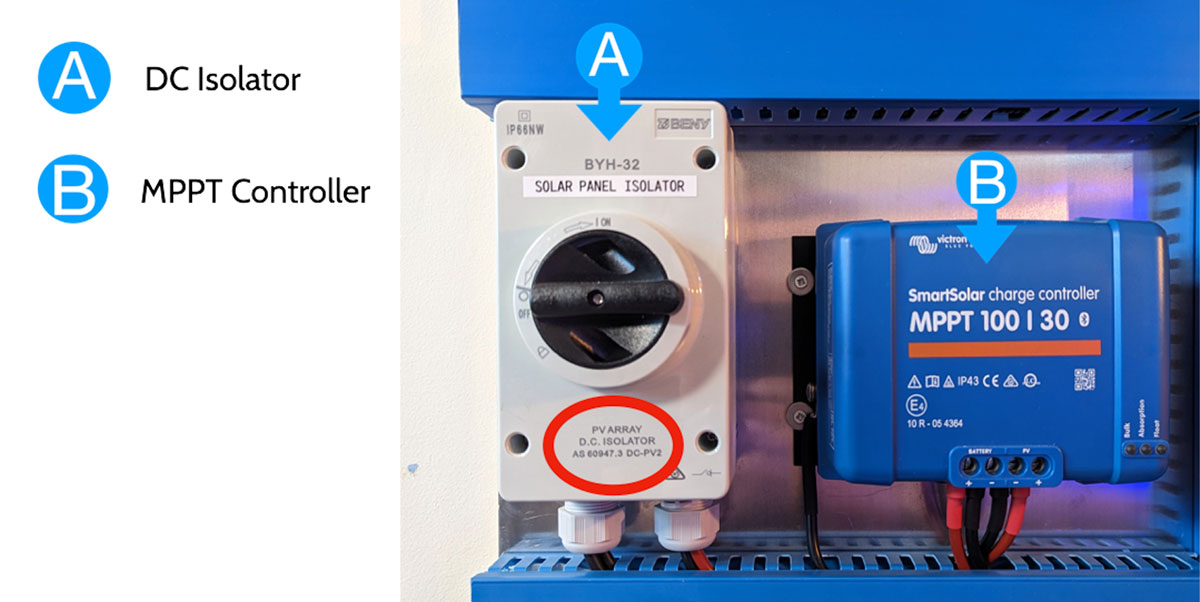
If the MPPT controller was in need of replacement or maintenance, the DC supply from both the battery and solar panels would need to be isolated in order for the system to be considered ‘safely isolated’. The easiest way to isolate these supplies would be via isolators.

So BS7671 is very clear in that it states you do require a DC isolator in order to isolate the DC supply, but it only specifically mentions inverters with no mentioned of charge controllers or any other electronic devices.

DC IsolatorA Tiny Build Electrics installation using a DC Isolator, conforming to 60947-3, to isolate the solar panels from the rest of the installation.
IET Code of Practice – Grid Connected Solar Voltaic Systems

The IET Code of Practice guide gives us a little bit more information and slightly less ambiguity when it comes to our solar installations within our campervans, motorhomes and tiny builds. This code of practice is specifically looking at Grid Connected Systems, and although campervans and motorhomes have stand alone, off-grid systems, they
often connect to the grid via the shore power inlets which then makes them a grid connected system and therefore
this code of practice does certainly have relevance when referring to their installations.

Before looking at the table provided by the IET Code of Practice its worth noting the definitions of the below:

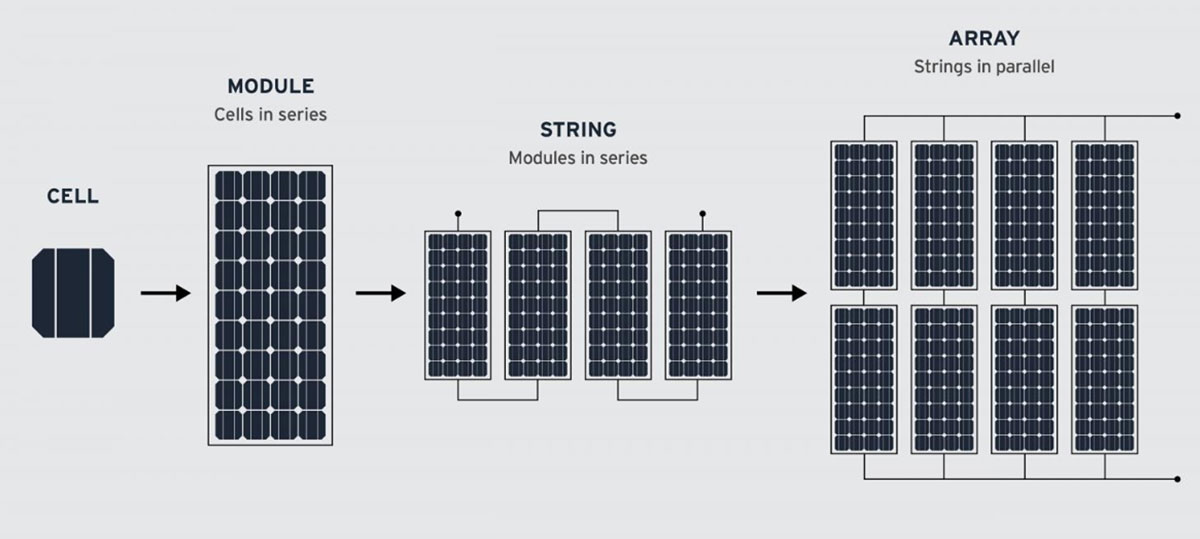
PV String – When modules are connected in series fashion, this forms a string. In a string, the voltage adds up though the current remains the same.

PV Array – When modules are connected in series and parallel fashion, this forms an array. In an array, the current adds up when connected in parallel and the voltage adds up when connected in series.

Module

Codes of Practice

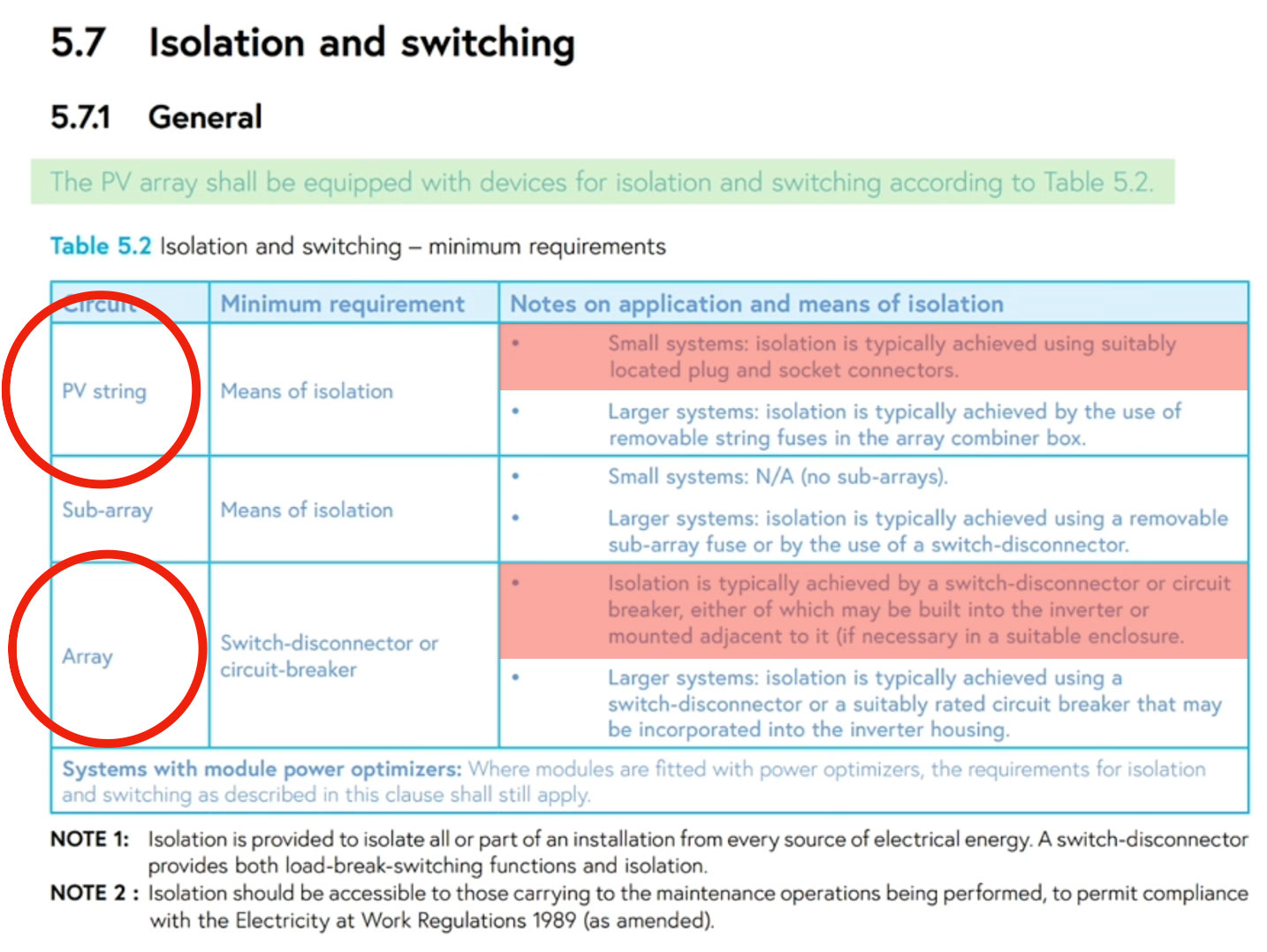
1. PV StringThe minimum requirement as a means of isolation for small systems is typically achieved using suitably located plug and socket connectors.

Referring back to the definitions above, it seems that most campervan and motorhome PV installations can be considered a string due to the small number of panels and systems being commonly wired in series, therefore according the the ‘Notes on application and means of isolation’ section, technically do not require an isolator or switch disconnecter.

In this instance, a MC4 connector, which is deemed as a ‘suitable plug and socket connector’, will be sufficient. Just remember that this is a minimum requirement and for both safety and practicality, we still recommend DC isolators for all of our systems.

The main reason that we at Tiny Build Electrics do not advocate using the MC4 connector as a method for isolation is that the connectors must be located in an area that is practical and accessible. The roof of the campervan, where most MC4 connectors are located on campervans and motorhomes, is neither practical or readily accessible.

2. ArrayIsolation is typically achieved by a switch-disconnecter or circuit breaker, either of which may be built into the inverter or mounted adjacent to it. (if necessary in a suitable enclosure).

Once again, referring to the definitions above a parallel connected set of modules (solar panels) would arguably be noted as an array and therefore requires isolation on the DC side. According to note above set out by the IET

‘Isolation is typically achieved by a switch-disconnecter or circuit breaker.’

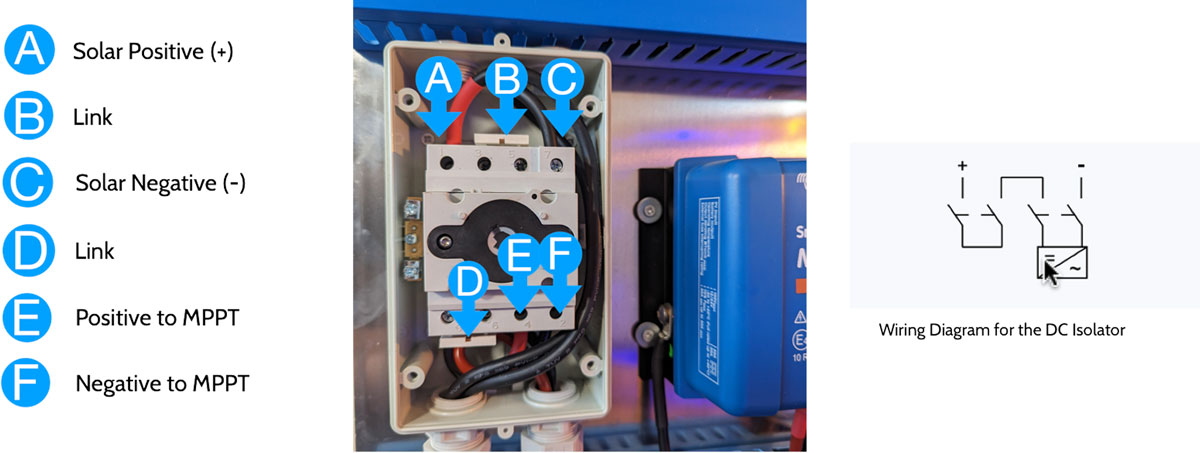
DiagramThe inside of a DC isolator used to isolate solar panels in a campervan’s electrical system
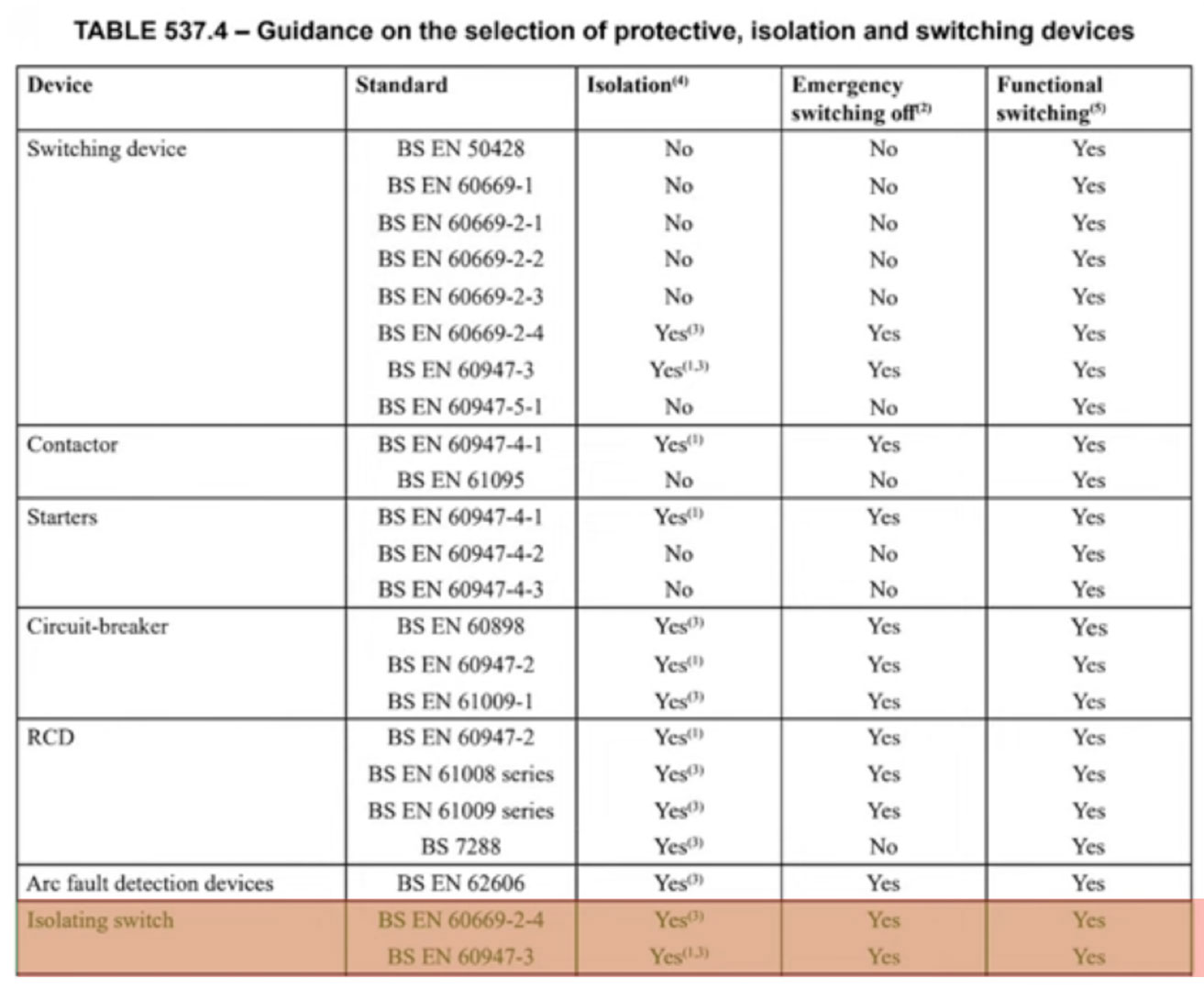
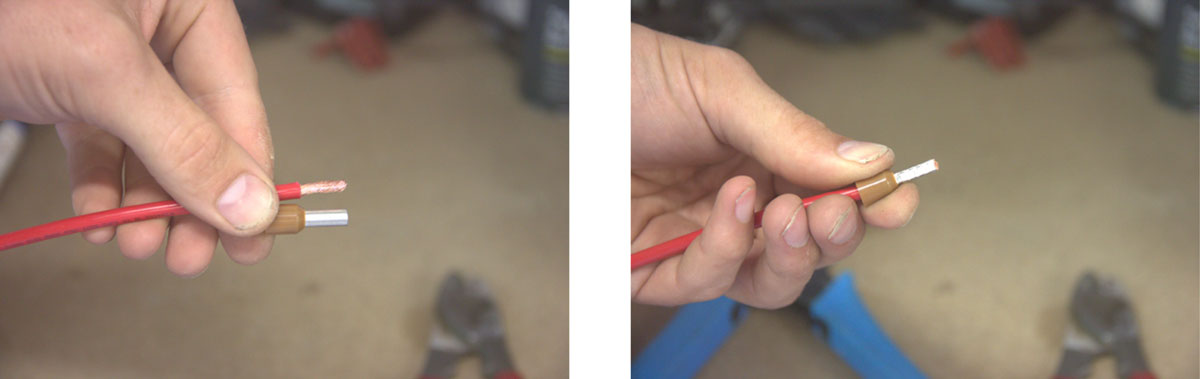
Table 537.4 – Guidance on the section of protective, isolation and switching devices

Table

We at Tiny Build Electcrics always recommend that you use an isolator, irrespective of your solar panel setup. The isolator used to isolate your PV panels must meet the British Standards set out in the table above.

The isolator must comply with BS EN 60669-2-4 and/or BS EN 60947-3 in order to be compliant with the British Wiring Regulations.


Do the above code of practices and regulations take campervans and motorhomes into consideration?

The best practices and regulations mentioned above do not specifically take campervans and motorhomes into consideration but that does not mean we can’t use the information provided to be compliant and ensure our installations are not only meeting the minimum requirements but going above and beyond to be safe.

BS7671 Section 721, Electrical installations in caravans and motor caravans focus directly on the electrical systems within motor caravans. This section merely notes the deviations from the rest of BS7671, so we’re seemingly left to read between the lines here.

The likelihood of a solar panel or solar charge controller getting damaged and/or needing maintenance in a campervan or motorhome is higher than in a house or building which do not move, vibrate, or get driven down a bumpy old track to get to the best surf location! This is one of the key reasons to install an isolator.


Argument against DC Isolators

An argument against DC isolators is that they cause a resistance in the solar panel cables and therefore reduce the current carrying capacity of the cable and as a result the output from the MPPT solar charge controller could suffer and will therefore be unable to produce the optimum charge current. Although this has some truth, the way in which the cables are terminated into the isolator plays a big part in reducing the resistance.

In most installations we see the multi stranded cable coming from the solar panels have been twisted together and poorly terminated into the contacts of the DC isolator. The strands are either damaged and/or missing, caused by pressure put on the cores when stripping away the cable’s insulation.

The use of ferrules here is paramount as it contains all the strands into one ferrule which not only makes a better contact within the isolator, but also makes it easier for the installer to locate the cable in the terminal.

Wires

Conclusion

We at Tiny Build Electrics approach this with a ‘belt and braces’ method way of thinking and always insist a DC isolator be present between the solar panels and the solar charge controller.

Should the solar charge controller need isolating for maintenance or replacement, one flick of the isolator and the MPPT is safely isolated from the solar panels. Having to disconnect MC4 connectors, whether placed on the roof or in a cupboard, is more leg work and not deemed as safe.

When it comes to terminating cables, there are several methods available, each with its own benefits and considerations. When installing the electrical system within your campervan, selecting the appropriate termination method for each cable is crucial for ensuring a secure and reliable connection.

In this article, we will explore four popular cable termination techniques which you are likely to use in your campervan: lugs, ferrules, ring crimps, soldered, MC4 connectors and direct connections with copper.


Several factors need to be considered in the selection process.

Firstly, the type and size of the cable must be taken into account, as different termination methods are designed for specific cable types and diameters.

Secondly, the application and environment in which the cable will be used play a significant role. For instance, if the cable will be exposed to harsh conditions such as high temperatures, moisture, or chemicals, a termination method with appropriate protective features must be chosen.

Additionally, the electrical load and voltage requirements must be considered to ensure the termination method can handle the expected current and voltage levels without compromising safety.


Lugs

Lugs are widely used in electrical installations to terminate cables. They are metal connectors typically made of copper or aluminium. Lugs are available in various shapes and sizes to accommodate different cable sizes and types. The cable conductor is inserted into the lug and secured using set screws or compression. The lug is then attached to a terminal block.

Benefits of lugs:

  • They provide a mechanically robust and electrically reliable connection.
  • Lugs can handle high current applications and are suitable for heavy-duty applications.
  • They allow for easy removal and replacement of cables when needed.
  • Lugs provide excellent conductivity and can withstand temperature variations.

Considerations:

  • Proper installation techniques and torque specifications are critical for ensuring a secure connection.
  • Correct sizing and compatibility between the lug and cable are important to prevent issues such as loose connections or overheating.
Wave

Method for Crimping A Lug

Select correct size lug & cable
Align lug with cable
Strip insulation to match lug barrel
Insert copper into lug
Ensure crimper is set for the correct size lug
Set crimper around the lug and compress
Crimp as many more times as required
Finish with heat shrink

Ferrules

Ferrules, also commonly known as ‘boot lace ferrules’, are cylindrical metal sleeves used to terminate individual wire strands within a cable. They are commonly made of copper, aluminum, or brass. Ferrules are crimped onto the wire strands using a specialised crimping tool, creating a secure connection. The terminated wire can then be inserted into a terminal block or other connection point.


Benefits of ferrules:

  • They provide strain relief, preventing wire strands from fraying or breaking.
  • Ferrules enhance the electrical contact area between the cable and the terminal, ensuring better conductivity.
  • They facilitate quick and efficient termination, especially when dealing with multiple wire strands.
  • Ferrules offer a neat and organised appearance to cable terminations.

Considerations:

  • Choosing the correct size and type of ferrule for the cable size and application is crucial for a proper connection.
  • Proper crimping techniques and tool selection are essential to ensure a reliable and secure termination.
Wave

Method For Crimping A Ferrule

Select correct size ferrule & cable
Strip cable to the length of the ferrule barrel
Locate cable inside ferrule barrel
Select the correct size crimp and compress the ferrule
Ensure the jaws are fully closed and tight around the barrel
Give the ferrule and tug to ensure its tight around the copper

Ring Crimps

Ring crimps, also known as ring terminals or ring connectors, are commonly used in electrical and automotive applications. They are metal terminals with a circular shape and a hole in the centre. The cable conductor is inserted through the hole, and the ring crimp is then secured using a crimping tool. The ring terminal can be attached to a stud or screw terminal for connection.

Benefits of ring crimps:

  • They provide a secure and permanent connection to studs or screw terminals.
  • Ring crimps are suitable for applications that require frequent disconnections and reconnections.
  • They ensure a reliable electrical connection and help prevent loosening over time.
  • Ring crimps are available in various sizes to accommodate different cable sizes.

Considerations:

  • Proper sizing and compatibility between the ring crimp and the terminal are crucial to ensure a snug fit.
  • Careful crimping is necessary to prevent loose connections or damage to the wire strands.

Wave

Method for crimping a ring crimp

Select correct size ring crimp & cable
Strip cable to the length of the crimp barrel (allow 1-2mm more)
Locate cable inside crimp barrel
Select the correct size crimper and compress the crimp
Ensure the jaws are fully closed and tight around the barrel
Give the crimp and tug to ensure its tight around the copper


Direct Connection with Copper

In some cases, direct connection with copper can be employed. This method involves stripping the cable insulation and directly twisting or soldering the bare copper wire to the desired connection point.

Although this is a termination method commonly used across the electrical industry, we would highly suggest, where you can, always using ferrules when terminating stranded copper cables. Not only does it make the termination neater, its easier to locate the cable into the screw terminals and safer knowing that all strands of copper are contained within a ferrule.

Benefits of direct connection with copper:

  • It is a simple and cost-effective method.
  • Direct copper connections can be easily made and undone without additional hardware.
  • This method is suitable for low-current applications or short-term setups.

Considerations:

  • Direct connections with copper may not provide the same level of reliability and longevity as other termination methods.
  • The exposed copper wire is susceptible to corrosion, oxidation, and physical damage.
  • This method is not recommended for high-current or critical applications.
  • You must ensure there is enough copper to create a sound, secure connection. Hence why in our photos below, the copper is ‘doubled over’.
Wave

Soldered Electrical Connection

A soldered electric connection is a method of joining two or more electrical components together using solder. Solder is a metal alloy with a low melting point that is specifically designed for creating a strong and reliable electrical connection.

The process of soldering involves heating the solder and applying it to the joint between the components. The heat melts the solder, allowing it to flow and form a bond with the surfaces it contacts. As the solder cools and solidifies, it creates a secure and conductive connection between the components.

Soldering offers several advantages for electric connections. It provides a strong mechanical bond, ensuring the components remain securely joined even under vibration or movement, key in any campervan build. . Additionally, soldering creates a low-resistance electrical pathway, allowing for efficient flow of electric current. The solder also helps protect the joint from oxidation and corrosion, which can degrade the connection over time.

Wave

Multi-Contact 4 Connectors

MC4 connectors, short for ‘Multi-Contact 4’, are electrical connectors developed specifically for photovoltaic (PV) systems. They are designed to facilitate quick and reliable connections between solar panels, as well as between panels and other system components such as, charge controllers, and combination boxes.

The main reason for using MC4 connectors in solar panel installations is their superior safety and performance characteristics. Here are some key aspects that make MC4 connectors the preferred choice:

  1. Waterproof and Weatherproof: Solar panels are typically exposed to various weather conditions, including rain, snow, and extreme temperatures. MC4 connectors are designed to be fully waterproof and weatherproof, providing reliable electrical connections even in harsh outdoor environments. This ensures the longevity and durability of the entire solar system.
  2. High Efficiency: MC4 connectors offer low power loss and high conductivity, which are critical for optimising the performance of solar panel systems. They minimise resistance and maximise the power transfer from the solar panels to the rest of the system, resulting in enhanced overall efficiency.
  3. Easy and Secure Connections: The design of MC4 connectors allows for quick and simple connections, reducing installation time and effort. They feature a snap-lock mechanism that securely locks the connectors together, preventing accidental disconnections. This ease of use makes MC4 connectors ideal for both professional installers and DIY enthusiasts.
  4. Compatibility and Standardisation: MC4 connectors have become the industry standard for solar panel connections due to their compatibility with a wide range of PV components. This standardisation ensures that different brands and models of solar panels and system components can be easily interconnected, promoting flexibility and interchangeability.
Wave

Regulations & Standard Compliance

Campervan cable termination methods and techniques are defined by industry standards and regulations. Following these standards ensures that the electrical system meets the required safety and performance criteria.

Proper termination techniques take into account factors like cable type, voltage rating, current-carrying capacity, and environmental conditions, ensuring that the system is correctly installed, maintained, and inspected.

The choice of termination method depends on factors such as the application, cable type, current requirements, and desired durability. By understanding these different techniques, you can ensure proper cable terminations that meet your specific needs while maintaining safety and performance.

The regulations in BS7671 regarding the termination of cables specify requirements for ensuring safe and reliable electrical connections. Here are some key points from BS7671 in relation to termination:

Cable Selection: The standard provides guidance on selecting the appropriate cable size, type, and insulation based on the specific application, current-carrying capacity, and environmental conditions.

Connection Methods: BS7671 outlines various approved methods for terminating cables, such as crimping, soldering, compression fittings, terminal blocks, connectors, and suitable cable glands.

Correct Sizing: The regulations specify that cable terminations should be correctly sized to match the cable being terminated. This ensures proper contact and prevents overheating due to inadequate contact area.

Mechanical Strength: Cable terminations should have sufficient mechanical strength to withstand mechanical stress, vibration, and pulling forces. This includes the use of suitable supports, clamps, and fixings.

Electrical Continuity: Termination methods should ensure good electrical continuity between conductors, minimising resistance and voltage drop. Proper connection techniques and materials are crucial to achieve this.

Insulation and Protection: Cable terminations should provide adequate electrical insulation and protection against moisture, dust, and other environmental factors. Insulating materials, insulating sleeves, and appropriate enclosures should be used as required.

Accessible and Maintainable: Termination points should be easily accessible for inspection, testing, and maintenance purposes. Adequate clearances and labelling should be provided to facilitate identification and future work.

Compliance with Manufacturer Instructions: Cable termination should be carried out in accordance with the manufacturer’s instructions and recommendations. This ensures proper use of specific termination products and techniques.


It’s important to note that BS7671 is regularly updated, and it is crucial to consult the latest version of the regulations and any applicable amendments to ensure compliance with the current standards.
While the above information provides a general overview, it is always recommended to refer to the specific requirements and guidelines outlined in BS7671, if you do not have the latest edition, we will be happy to help guide you through the regulations. We pride ourselves in working to the regulations and also ensuring our clients are too.

For further information, we’re here to help!

Contact us


Conclusion

Terminating cables correctly is essential for achieving secure and reliable connections in your campervan. Lugs, ferrules, ring crimps, copper connections and soldering are all viable methods, each with its own benefits and considerations. The choice of termination method depends on factors such as the application, cable type, current requirements, and desired durability. By understanding these different techniques, you can ensure proper cable terminations that meet your specific needs while maintaining safety and performance.

One common question that we get asked here at Tiny Build Electrics is in relation to series and parallel. Batteries in parallel? Solar array in series? Pros, cons?

This is a key stage in your Tiny Build and something you definitely want to get right! In this article we are going to break it down into small, manageable chunks to make it easy to understand.


Batteries in parallel

“In parallel the battery voltage remains constant and the amp hours increase”

Put simply, you connect the positive to positive, negative to negative. Easy, right? Well.. kind of!

The diagram below is why this type of connection is called ‘parallel’. The positives and negatives remain parallel to each other at all times. They never touch or connect, this is a parallel wiring format.

Voltage

Every time a battery is added to the bank the voltage remains the same but the amp hours increase

So, you understand the basic layout of a battery bank connected in parallel, but the electrical principles are also worth understanding. Again, we can keep this simple.

Every time we add a battery to the bank the voltage remains the same but the amp hours increase by the size of the added battery.

Here, you can have a look at a real life example of this, as the batteries in our own Tiny Build Electrics example are wired in a parallel configuration.

Positive or Negative

The system above comprises of two individual 100ah lithium-ion batteries connected in parallel.

Here we have a total of 200ah at 12V. The common mistake here is to double the voltage and not the amp hours. In parallel the battery voltage remains constant and the amp hours increase.

Connecting your batteries in parallel is not just as simple as connecting all the reds and all the blacks. You also need to consider balancing the system.

How can you do this?

Instead of connecting both the positive and negative at one end of the bank via one battery, we connect the positive to the load at one battery bank and the negative to the load from the other end of the battery bank.

The diagram to the right depicts a battery bank correctly connected in parallel.

See how the negative has been taken from the last battery to the installation, whilst the positive has been taken from the first battery to the installation. The bank is now working as one unit. The current being drawn from the battery bank will now be equal across each battery and the bank will receive charge equally across all its batteries.

This way the charge and discharge is evenly spread throughout the entire battery bank. This way of wiring increases the likelihood that the manufactures specified life cycles will be met. If this is not adhered to you are in danger of damaging your batteries and depleting their lifecycles.

positive

Common mistakes when connecting batteries in parallel

When connecting your batteries in parallel you must balance your battery bank as discussed above. This is a crucial step and often overlooked during the installation stage.

This diagram shows a common way in which parallel battery banks are incorrectly connected. The way in which these are connected puts strain on the primary batteries and is considered unbalanced.

As you can see in the diagram the battery closest to the installation, let’s call this the primary battery, is the first in line to be discharged and is also the first to receive a charge current.

Each set of connecting cables, between each battery, creates a resistance. Electricity will always take the path of least resistance, like water flowing in a river. The path with the least resistance always wins. In the diagram shown, the primary battery is the first power source which has least resistance and therefore this one takes the biggest hit.

This will then happen in reverse when the battery bank is being charged. The primary battery gets a largest amount of charge current, with every set of interconnecting cables the charge current depletes from one battery to the next leaving the last battery with very little charge current.

Useful Definitions

Resistance: A measure of the opposition to current flow in an electrical circuit.
Charge Current: A flow of electrical charge carriers

Undercharged

Batteries in series

“In series the battery voltage increases and the amp hours remain the same”

Batteries wired in series are different. The principles are in reverse to a parallel setup. Instead of the voltage remaining the same and the amp hours increasing, the voltage increases and the amp hours remain the same.

Keep in mind, if you plan to wire multiple batteries together in series, each battery needs to have the same voltage and capacity and rating, or you can end up damaging the batteries.

This may seem irrelevant as I’m sure, like most people, you plan on having a 12v system in your camper van.
But, with older vans and vehicles becoming ever more popular to convert into tiny builds, their onboard electrical systems may surprise you.

A lot of big lorries and buses are being converted into tiny homes and they often have a 24V or 48V systems. Something to definitely bear in mind to ensure you purchase the correct equipment for your system.

To Installation

4 x 12v 100ah batteries in series 48V 100ah Battery Bank

Series & Parallel Wiring for Solar Panels

Each solar panel has a positive and a negative. A series connection is created when one panel’s positive is connected to the negative of another.

Both series and parallel wiring formats can also be applied to solar panel arrays. There are pros and cons to both methods. This is something you should consider carefully before starting your build.

When you wire multiple panels in series, their output voltages add together and their output currents remain the same. Conversely, when you wire numerous solar panels in parallel, their output currents add together, but their output voltages stay the same.

Series Solar Panel Wiring

Each solar panel has a positive and a negative. A series connection is created when one panel’s positive is connected to the negative of another.

Wire Diagram

Total Voltage: 22v x 3 = 66V
Total Current: 4.52A
Total Power: 300W

*These calculations do not include resistance losses caused by the panels and the cables. These numbers are for example purposes only.

From the calculation above you can see that the voltage has been multiplied by the three panels to give us 66v, the current remains at 4.52 amps. The total power (watts) is also accumulative of the three panels. This accumulates to 300w.

So, what are the Pros to wiring in this series over parallel?

Pros to series wiring format

  • Higher voltage gives the MPPT controller (maximum power point tracking) more range when adjusting its charge current.
  • MPPT Charger requires 5 volts more than the battery voltage in order to start charging. This works well with the series wiring as it creates a higher voltage and the charger is able to charge from earlier in the day and later into the evening extending the daily charge period.
  • On cloudier days the solar arrays output voltage is reduced, but due to the higher voltages produced by the series wiring format, the MPPT is still able to create a charge current. Whereas a parallel array would drop below the MPPT’s minimum PV voltage and switch off.
  • A lot simpler to wire
  • Uses less cable than parallel

Cons to series wiring format

  • If any shade covers even a single cell on a panel, it will reduce the whole system’s power output. For example parking under a tree will seriously impede your output charging current. In simple terms, the array likes to be balanced, it likes to see the same amount of light over every cell and when it gets this, its incredibly effective.
  • Each panel and every cell within that panel are critical in a series format.
  • Any spots of dirt over any of the cells will impede how the system charges. Therefore if your panels are in series they will need to be kept clean to maintain a optimum charge current. In series you cannot connect different size panels together. The power (watts) from the first panel passes through both the second and the third to make the accumulation, they all must be equal in size.
Gland Diagram

Two solar panels wired in series fitted to the top of a camper van.

The panels themselves have two cables each, so 4 cables altogether, but by connecting the positive of one to the negative of the other we essentially create one giant panel. That then leaves a positive from one panel and a negative from the other. These are the two cables we send down to the electrical control panel to connect to the MPPT controller. As seen this in the photo.

Parallel Solar Panel Wiring

A parallel connection is created when the positive of one panel is connected to the positive of another, and the negatives are connected to each other.

Dod Diagram

Total Voltage: 22V
Total Current: 4.52A x 3 = 13.56A
Total Power: 300W

*These calculations do not include resistance losses caused by the panels and the cables, These numbers are purely for example purposes.

From the calculation above the voltage now remains the same, a constant 22v. The current is 13.56A (that’s the current of each panel multiplied by 3).

A solar array in parallel is fantastic if partially shaded. In simple terms, if a few cells were covered by an overhanging tree, the rest of the array would pick up the slack and still give a reasonable charge current.

Pros to parallel wiring format

  • One of the biggest pros to wiring in parallel is you can mix different size solar panels together. If, up on top of your campervan or motorhome roof, you have fans, surfboards, wifi boosters and therefore only have room for a 100w, a 50w and a 25w, they can be configured in different orientations around your equipment. Although this can be done, we at TBE do not advise this as it is very inefficient.
  • When in optimal conditions parallel can give a very good, strong charge current.
  • When shade hits any part of a solar array wired in parallel, the power output from that panel reduces significantly. BUT, any other panels in the configuration are unaffected.

Cons to parallel wiring format

  • The parallel setup needs a certain amount of power from the solar panels in order to create a charge current.
  • During the winter months, when the sun is low in the sky, the parallel format will struggle to produce enough voltage to initiate a charge.
  • Requires a lot more cabling to wire a parallel format therefore your cable costs will be higher.
Solars

*These calculations do not include resistance losses caused by the panels and the cables, These numbers are purely for example purposes.

Real world results

MPPT Parallel
MPPT Series

These two screenshots above were taken on exactly the same day under the same conditions. The difference being that one set of panels is wired in parallel and the other wired in series.

The main difference you can see is that the parallel system has around 18v to optimise the best charge current, whereas the series system has between 28V-70V. So, in the example above, the MPPT has dropped the voltage to 29.38V in order to increase the charge current to 5.2A.

The parallel system is just about managing a charge current but its very weak.

Where the parallel system shines is if the solar panels were suddenly to become partially shaded by a tree, for example. The series system would dramatically reduce while the parallel would be little effected as the panel which isn’t partially covered is still able to produce its power, the series system requires all cells to be clear to effectively create a charge current.

If you plan to travel in all seasons then series solar wiring is the better format for those conditions with less sunlight. The series wiring combined with an MPPT controller maximises your chances of getting a healthy charge current even on those overcast days.

Although you may suffer more losses during the optimum operating conditions, series can produce a high enough voltage to charge the batteries from dawn to dusk.

If you travel in a camper van or motorhome that has a roof full of vents and fans and the only option is to fit panels in here, there and everywhere, then parallel will provide you with the option of having multiple, different sized panels together on your roof but remember, the panels need to have the same voltage to maintain efficiency.

Van

Diagram above demonstrating solar panels wired in series with a Victron Energy MPPT Controller

Our recommendations at Tiny Build Electrics

  • Wire your campervan solar setup in series.
  • Wherever possible, use the same size solar panels throughout the entire array.
  • If you must mix panels then try to get their specification as close as possible.
  • Pay attention to anything on your roof that could cast a shadow onto your solar panels, including maxxair fans, TV dishes and sports equipment.
  • Avoid parking in the shade or under trees to maximise performance.
  • Keep your solar panels really clean.
  • Use an MPPT controller when wiring in both series or parallel to maximise performance