If you’re planning a campervan road trip, a solar charge controller is one of the essential components to consider. Solar panels can provide you with the power you need to run your appliances and devices, but without a charge controller, you could risk damaging your batteries.
Quick answer
In short
Fit an MPPT solar charge controller rather than PWM. It harvests more from the panels, especially in low light, and charges in three stages to look after the battery. Size it so its PV voltage rating sits above the array’s maximum voltage, and its charge current suits the array and battery bank. Then set it to your battery’s charge profile.
- MPPT over PWM
- PV voltage rating above the array maximum
- Set the profile to your battery type
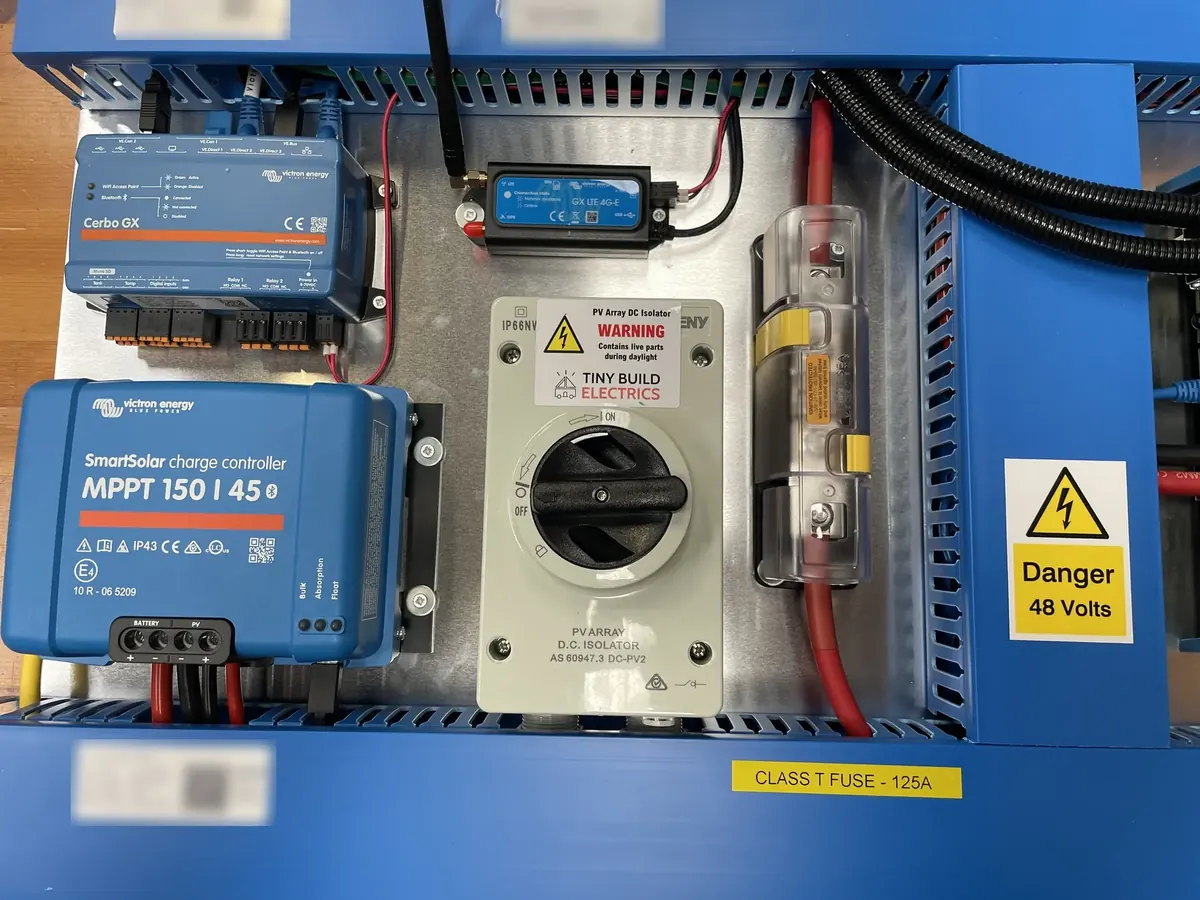
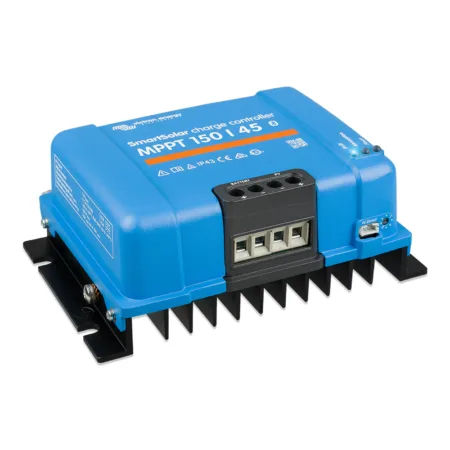
- We fit Victron SmartSolar MPPTs
Planning it yourself? Sketch your system in our free system designer, or see our self-build campervan electrics kit.
On this page 7 sections
What is a Solar Charge Controller?
A solar charge controller is a device that regulates the amount of current flowing from your solar panels to your batteries. It acts as a middleman between your solar panels and your batteries, ensuring that your batteries receive the correct amount of charge and preventing them from overcharging.
Types of solar charge controller
There are two main types of solar charge controllers: PWM (Pulse Width Modulation) and MPPT (Maximum Power Point Tracking).
What we fit
MPPT
Tracks the panels’ maximum power point, so it harvests more, especially in low light.
Basic
PWM
Simpler and cheaper, but it pulls the panels down to battery voltage and wastes more of their output.
PWM controllers are the most basic and affordable type of solar charge controller. They regulate the voltage of the solar panels by pulsing the current on and off. However, they are not as efficient as MPPT controllers, especially when the temperature is high or when the panels are partially shaded. We do not recommend this type of solar charge controller. They are now outdated, and due to the advancement in battery technology the batteries need more of a balanced charge current to maintain healthy cycles.
MPPT controllers, on the other hand, are more advanced and efficient. They use a smart algorithm to track the maximum power point of the solar panels and convert it into the optimal voltage for the batteries. This means that they can extract more power from your solar panels, especially in low-light conditions or when the temperature is high.
Three-stage charging
Another benefit to the MPPT controller is the fact that it also offers three stages of charging which is crucial when trying to maximise the life cycles from your batteries and get the most from your investment. These three stages are Bulk, Absorption and Float. The bulk stage maximises everything the controller can muster from the solar array and gives the batteries the greatest charge current. Once the battery meets the bulk stage parameters, the controller then moves on to the second stage, absorption. The absorption stage begins to tail the charge current off and slow the charging process down. The third stage is float, this stage is the final stage before the batteries reach 100% state of charge. It tops off the charge and remains like this until the battery voltage drops and they require a charge.
These three stages vary depending on the type and size of your battery bank. Different types of batteries require different lengths and strengths of charging. You can read more about battery types in our Battery Types guide.

Why a campervan needs a solar charge controller
If you’re planning on relying on solar power to keep your appliances and devices charged while on the road, you need to make sure that your batteries are being charged safely and efficiently. Without a solar charge controller, you could risk damaging your batteries, shortening their lifespan, and even starting a fire.
In addition, a solar charge controller can help you get the most out of your solar panels. By regulating the charge flowing from your panels to your batteries, you can ensure that you’re maximising your power output and charging your batteries as efficiently as possible.
- 01
Protecting the batteries
Solar charge controllers help protect the campervan’s batteries from overcharging, which can damage them and reduce their lifespan. When the batteries are fully charged, the charge controller will stop sending power from the solar panels to the batteries, preventing overcharging.
- 02
Optimising power output
Solar charge controllers help optimise the power output of the solar panels by regulating the voltage and current that flows to the batteries. This ensures that the batteries receive the right amount of power, which can increase their efficiency and reduce the charging time.
- 03
Monitoring system performance
Some solar charge controllers have built-in monitoring systems that can help you keep track of your power usage and the performance of your solar panels. This can help you optimise your energy usage and make sure that your system is working as it should.
- 04
Increasing battery life
By regulating the charging process and preventing overcharging, solar charge controllers can help extend the lifespan of your campervan’s batteries. This can save you money in the long run by reducing the need for battery replacements.
Sizing a solar charge controller
To correctly size a solar charge controller, you need to consider the following factors:

- 01
Solar Panel Voltage
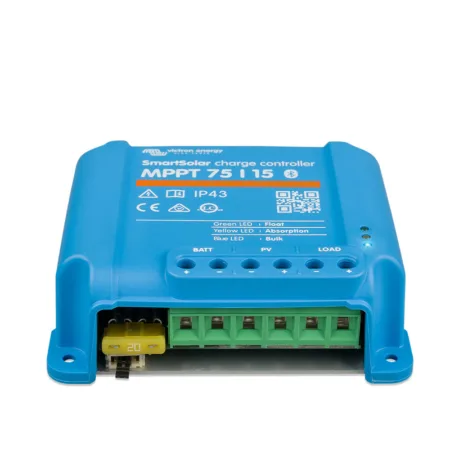
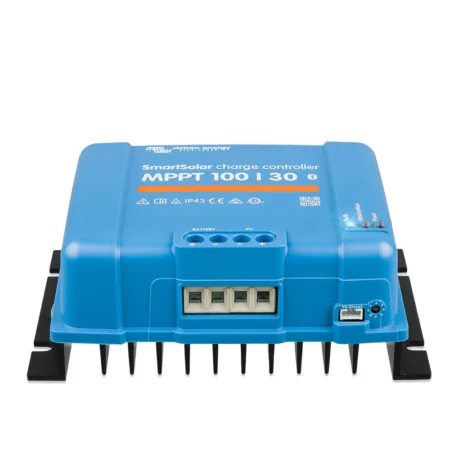
The controller should be rated for the maximum voltage of your solar panel array. Make sure to select a controller with a voltage rating that is higher than the maximum voltage of your solar panels.
- 02
Solar Panel Current
The controller should also be rated for the maximum current of your solar panel array. Make sure to select a controller with a current rating that is higher than the maximum current of your solar panels.
- 03
System Voltage
The controller should be able to handle the voltage of your battery bank. Make sure to select a controller with a voltage rating that matches your battery bank voltage.
- 04
Power Rating
The controller should have a power rating that is sufficient for your system. To determine the power rating, multiply the maximum voltage of your solar panels by the maximum current of your solar panels. This will give you the maximum power output of your solar panel array. Make sure to select an MPPT controller with a power rating that is higher than the maximum power output of your solar panel array.
- 05
Operating Temperature
The controller should be able to operate in the temperature range that your system will be exposed to. Make sure to select a controller with an operating temperature range that matches the worst case climates that you plan to travel to.
Leave some headroom
Once you have considered these factors, you should select an MPPT controller that meets or exceeds your system’s requirements. If you are unsure about any of these factors, book in for a consultation below where we will be more than happy to help!
Match the MPPT to your battery
Lithium, AGM and gel batteries each need a different charge profile. Check the controller can be set to your battery type, and on lithium make sure it can stop charging when the BMS asks it to. Victron SmartSolar controllers do both, and the Bluetooth app lets you watch the daily yield so you know the panels are earning their place.

The Advantages of Victron Energy MPPT Controllers
When it comes to MPPT controllers, Victron Energy is one of the leading manufacturers in the industry. Here are just a few of the advantages that come with using a Victron Energy MPPT controller:
- 01
High Efficiency
One of the key benefits of using a Victron Energy MPPT controller is that it can increase the efficiency of your solar panels. MPPT controllers are able to harvest more energy from the panels than other types of controllers, and Victron Energy MPPT controllers are some of the most efficient on the market.
- 02
Durability
Victron Energy MPPT controllers are built to last. Victron uses high-quality components and designs them to withstand harsh environmental conditions. This means that you can rely on your Victron Energy MPPT controller to continue working efficiently for years to come.
- 03
User-Friendly
Despite their advanced technology, Victron Energy MPPT controllers are also user-friendly. They come with easy-to-understand displays and you can set them up quickly and easily.
- 04
Versatile
Victron Energy MPPT controllers work with a wide range of solar panels and batteries. This means that you can customise your solar power system to meet your specific needs and preferences.
- 05
Remote Monitoring
Another advantage of a Victron Energy MPPT controller is that you can monitor it remotely. This means that you can keep track of your solar power system from anywhere in the world, which is particularly useful for off-grid installations.
Is a Victron MPPT worth it?
Victron Energy MPPT controllers are an excellent choice for anyone looking to maximise the efficiency and performance of their solar power system. With advanced features, high efficiency, and reliable performance, they are a popular choice for both residential and commercial solar power installations. If you’re looking for a high-quality MPPT controller, Victron Energy is a brand that you can rely on.
Choosing your solar charge controller
Solar charge controllers are essential components of any campervan solar power system. They ensure that your batteries stay healthy and fully charged, which can help you stay off-grid for longer periods of time. When choosing a solar charge controller, make sure to consider the size, compatibility, and features that best suit your needs. With the right solar charge controller, you can enjoy the benefits of solar power while on the road.
Solar charge controller FAQs
Is MPPT better than PWM for a campervan?
Yes. An MPPT harvests more from the panels, especially in low light, and charges in three stages. PWM is simpler and cheaper but wastes more of the panels’ output.
How do I size a solar charge controller?
Its PV voltage rating must sit above the array’s maximum voltage, and its charge current must suit the array and the battery bank.
Why does the charge profile matter?
Each battery type needs its own charge voltages. Set the controller to your battery’s profile, or to the maker’s figures for lithium, so it isn’t over or undercharged.
About the reviewer: Tom Alderdice
Tom holds the 18th Edition (BS 7671) and inspection and testing qualifications, plus NCC training in caravan and motorhome electrics.
Tiny Build Electrics is an Authorised Victron Energy Installer. See Tom’s full qualifications