Winterising campervan electrics in short
Winterising campervan electrics comes down to two choices: keep a lithium battery charged and protected all winter, or charge it to its storage level (30 to 50% for a Fogstar) and switch the whole campervan electrical system off. Both work, as long as you commit to one. What damages batteries is the bit in between: a van left half on, with small loads quietly draining it and chargers that can’t run in the cold.
- Fogstar storage: 30 to 50% state of charge
- No lithium charging below 0°C without heat
- Kill parasitic loads or keep it charging
- Monitor it remotely through VRM
Lithium comes first, starting with Fogstar, then Victron. Victron’s Lithium Smart batteries and the Victron chargers follow, then lead-acid, starter batteries, damp and home hook-up safety. Battery figures come from Fogstar’s and Victron’s manuals, datasheets and published guidance, and the hook-up rules from BS 7671:2018+A4:2026, which apply to a campervan or motorhome electric hook up alike.
Fogstar batteries in winter
Cold charging. Fogstar’s Drift and Drift PRO batteries have 36W heating pads controlled by the BMS. At 0°C the BMS stops charging and sends the incoming charge current to the pads instead, then lets charge into the cells once they reach 5°C. The pads run only from a charger’s current, never from the battery itself, and Fogstar’s manual gives 0.5A as the minimum charge current for them to start. The Fogstar Drift app shows a Low Temperature Charging warning while this happens, and Fogstar says that’s normal.
Drift ECO. However, the ECO has no heater. Its BMS blocks charging below 0°C, and Fogstar’s advice for charging in freezing weather is to bring the battery above about 5°C first.
Discharging. Fogstar rates its LiFePO4 leisure batteries for discharge down to -20°C. Below that, the BMS disables discharge.
Storing a Fogstar over winter
Storage over winter. Fogstar recommends storing at 30 to 50% state of charge, with about 50% as the aim, or around 13.4V on a battery you can only check by voltage. Its spec sheets give a storage temperature range of 0 to 35°C for the Drift PRO and 10 to 35°C for the Drift and Drift ECO, so a Fogstar shouldn’t sit for weeks in a van that freezes. So for a long, cold lay-up, keep the van somewhere sheltered or take the battery indoors. To lay the van up:
- Switch off Charging and Discharging in the Fogstar Drift app, or use the button on models that have one. Fogstar notes that low-power loads such as LED lighting can still draw with discharge off, so isolate it with a mechanical disconnect switch or disconnect the battery.
- Recharge it at least every three months, and sooner if it has fallen below 30%.
- Before using the van again, charge it fully. Fogstar’s winter guide adds a full charge and discharge cycle so the BMS recalibrates.
Above all, don’t let it reach empty in storage. On 12V Drift batteries the BMS cuts discharge at 11.6V, but it still needs a little power itself and the cells self-discharge at around 1 to 2% a month, so an uncharged battery keeps falling. At 7V the Bluetooth shuts down and the battery has to go back to Fogstar for revival, which its warranty doesn’t cover.
Fogstar charging and Victron settings
Slow charging in the cold. Fogstar notes that cold raises internal resistance, so chargers reach their voltage targets early, cut absorption short or drop straight to float. In other words, that’s the cold, not a fault.
Victron settings for a Drift. Fogstar gives 14.2V absorption, half an hour of absorption per 100Ah, 13.5V float and temperature compensation off. It says the charger’s low-temperature cut-off can stay off on a Drift, because the battery has its own low-temperature charge protection.
Victron’s Lithium Smart batteries are set up differently: an external BMS blocks charging below 5°C, not 0°C, and Victron says to store them almost full. The sections below cover them and the Victron chargers.
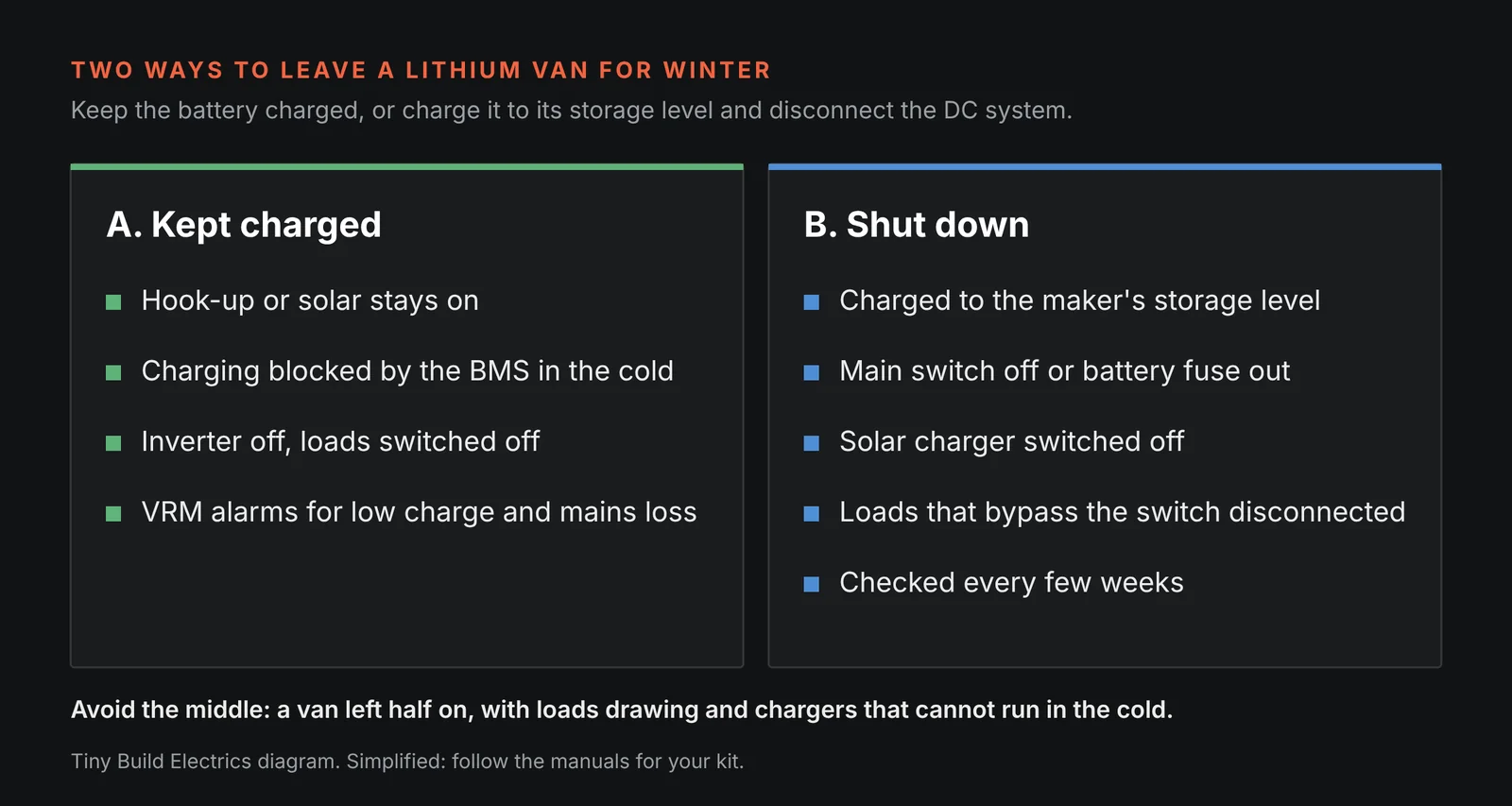
Two ways to leave a lithium van for winter
For winterising campervan electrics, Victron’s Lithium Smart battery manual puts the rule in one line: when you leave a system unattended, either keep the batteries charged during that time, or make sure they’re almost full and then disconnect the DC system from the battery. Fogstar’s storage advice is the second route, at 30 to 50% rather than almost full.
Route 1
Keep it charged
Leave it on hook-up or solar with charging the battery can accept, and loads it can cover, so it stays protected all winter.
Route 2
Store it and switch off
Charge to 30 to 50% for a Fogstar, then isolate the whole system so nothing drains it.
| Kept charged | Shut down | |
|---|---|---|
| Best for | Vans on a drive with hook-up, or good roof solar | Storage yards, long lay-ups, no power on site |
| Battery | Held near full by a charger | Charged to its maker’s storage level, then isolated |
| Cold risk | Chargers must stop below the battery’s charging limit | Storage temperature: a Fogstar wants keeping above freezing |
| What can go wrong | Hook-up trips, charging stops, loads keep drawing | A load wired around the main switch drains it |
| Check | VRM alerts, or a look in VictronConnect | A visit every few weeks |
Using the van now and then? Keep it charged. Laying it up until spring? Shut it down.
What charge should a lithium battery be stored at?
First, follow the battery maker. Fogstar’s figure is 30 to 50%, as above. Victron’s is higher: for its Lithium Smart batteries it says to store them almost full before disconnecting, and its datasheet gives a maximum storage time of one year at 25°C when fully charged.
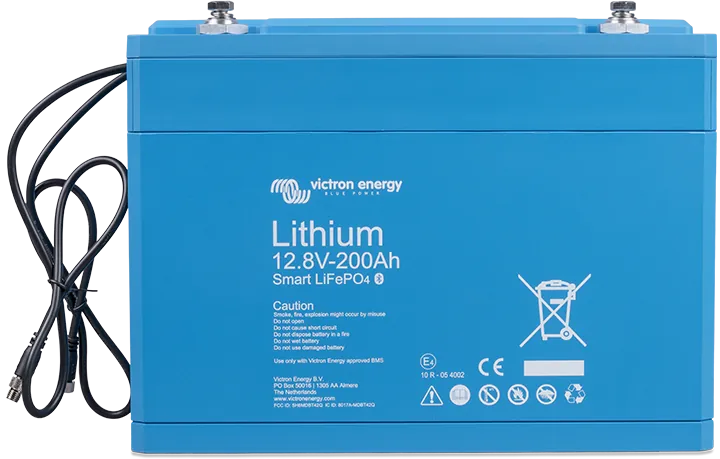
Whatever the storage level, the number that matters is the one you don’t want to reach. On a Victron Lithium Smart battery, after a low-voltage shutdown, Victron says only about 1Ah is left for every 100Ah, and a residual draw of just 10mA can damage a 200Ah battery left discharged for more than eight days. Start high enough, and isolate well enough, that nothing can pull it to empty before you’re back.
Victron also recommends at least two hours in absorption each month on lightly used systems, so the cells can balance.
Why won’t lithium charge in the cold?
A lithium iron phosphate (LiFePO4) cell can discharge in the cold but can’t safely charge in it. Fogstar’s BMS stops charging at 0°C, as above. Victron’s Lithium Smart manual sets a higher charging limit:
- Charging: +5°C to +50°C.
- Discharging: -20°C to +50°C.
- Storage: -45°C to +70°C.
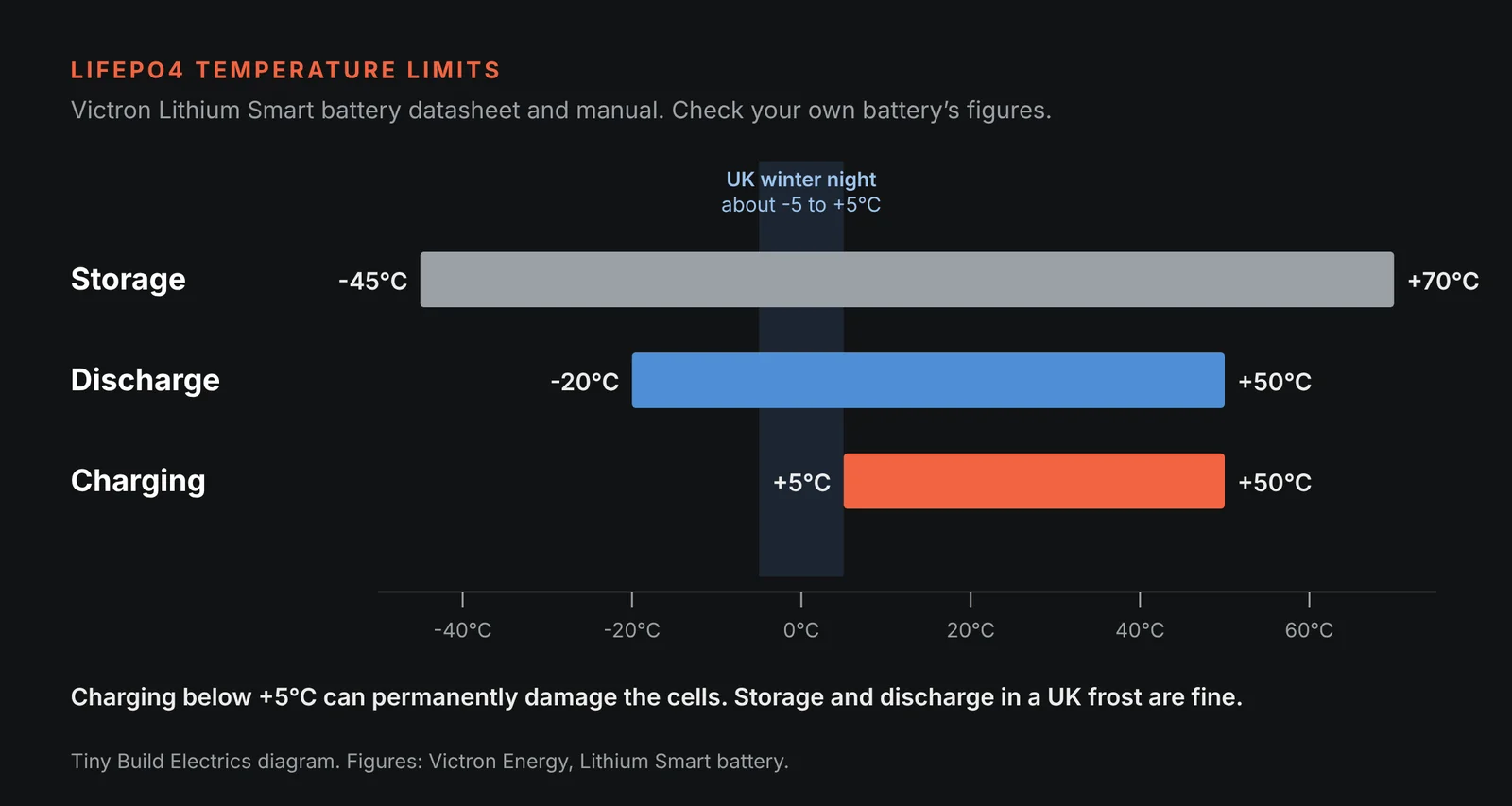
The manual is blunt: a cell will sustain permanent damage when charged below 5°C. The BMS setting Allowed-To-Charge minimum temperature defaults to 5°C, and setting it lower voids Victron’s warranty. A Victron Lithium Smart is rated for storage down to -45°C, so a frosty van is inside its range. A Fogstar isn’t, as its storage range starts at 0°C or 10°C depending on the model. In both cases, the risk is a charger running on a frosty morning with nothing telling it to stop.
Cold also cuts usable capacity: about 20% less at 0°C and about 50% less at -20°C, says Victron, so watch voltages more closely than the percentage.
Low-temperature charging and the cut-off in Victron chargers
There are two layers of protection: the battery’s BMS and the charger’s own cut-off.
The BMS. A battery with a BMS that controls the chargers will turn them off below its minimum charge temperature. With a Victron Lithium Smart battery, that’s the external BMS (such as a VE.Bus BMS V2 or a Smart BMS CL 12/100) switching the chargers off through their remote terminals or over VE.Bus.
The charger’s own low-temperature cut-off. Victron SmartSolar MPPT chargers and the Orion XS have a Low temperature cut-off setting in VictronConnect. On the MPPTs it’s off by default; turned on, it defaults to 5°C and charging resumes 0.5°C above the setting. It only works if the charger gets the battery’s temperature over a VE.Smart network, from a Smart Battery Sense or a battery monitor with a temperature sensor, such as a SmartShunt with its sensor fitted.
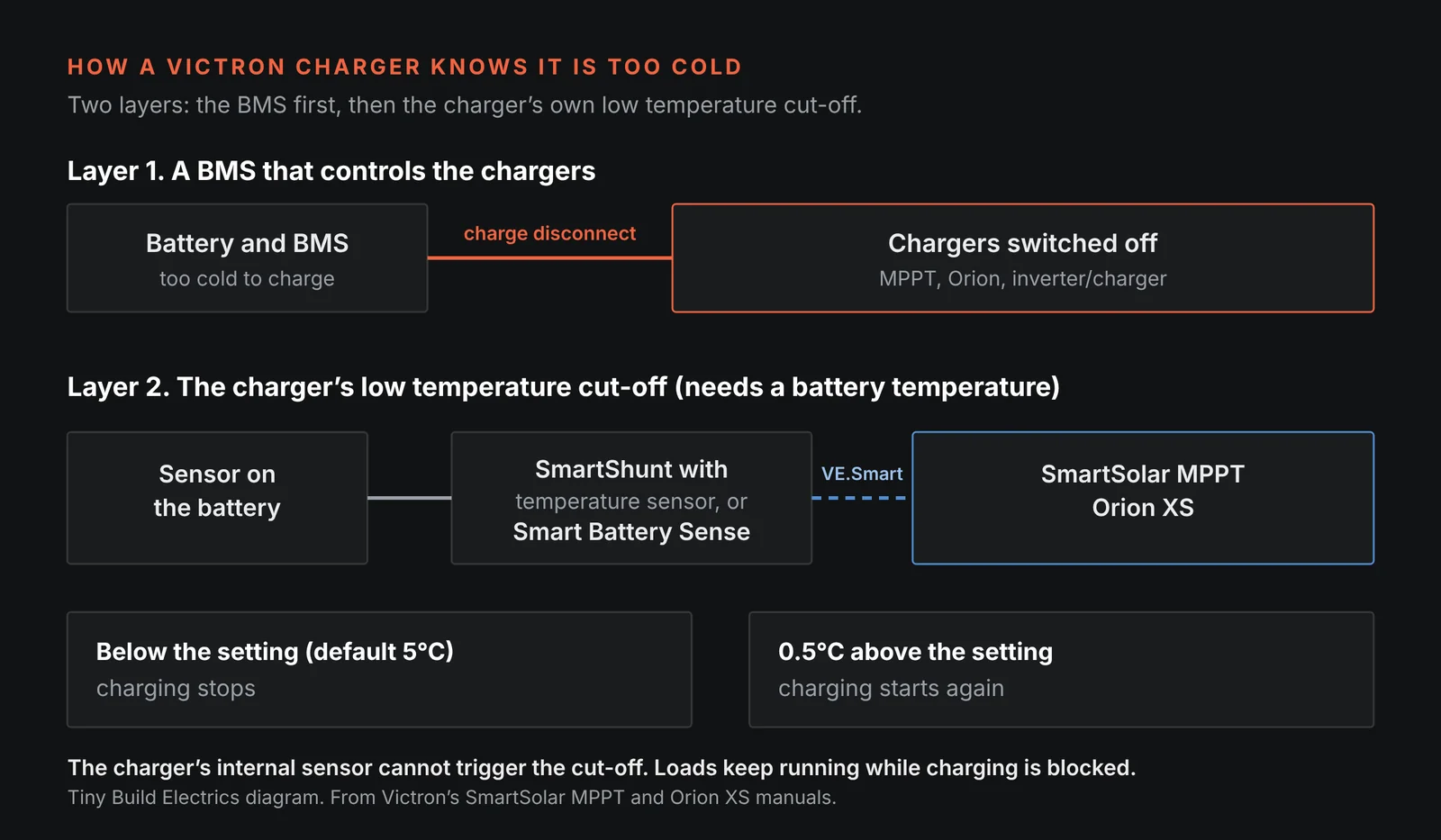
Victron says the setting isn’t needed with its Lithium Smart batteries, because their BMS already blocks charging, and Fogstar says the same for its Drift batteries. It matters for batteries that can’t. On the Orion XS it has no effect when a BMS controls the charger.
One catch: when charging is blocked, DC loads keep running from the battery, even on hook-up. For example, a 12V fridge and a GX device can run it down through a cold spell.
Do you need a heated battery or a heat pad?
If you use the van in winter and want to charge in the cold, the battery has to be warmed first. There are two routes.
The first is a battery with heaters built in, such as Fogstar’s Drift and Drift PRO, covered above. By contrast, a Drift ECO or a Victron Lithium Smart has none.
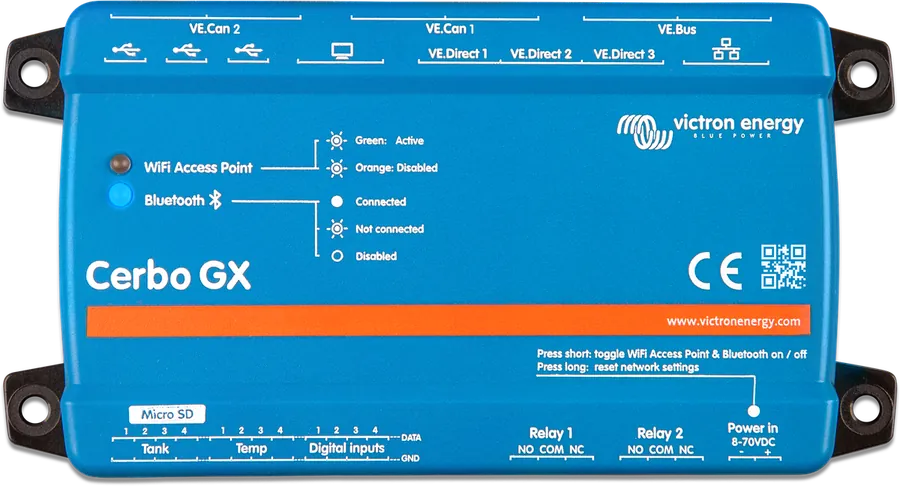
The other route is a 12V heat pad under or around the battery, switched by a thermostat or controller. A Victron Cerbo GX MK3 can do it with a relay: its manual’s example switches a pad on at 5°C and off at 10°C from a sensor on the battery. With Victron NG batteries and a Lynx Smart BMS NG, it can use the battery’s own temperature data. The relays have a power limit, so a bigger pad needs a contactor.
- Run a heat pad only with a charge source behind it: hook-up, solar or the alternator.
- If you insulate the locker, keep the clearance Victron asks for: 20mm on all four sides of a Lithium Smart battery.
Which loads drain a parked van?
Victron’s manual warns that small loads left on while the system isn’t in use can over-discharge and damage a lithium battery. In a parked van, the usual ones are:
- USB sockets with LED indicators or voltmeters, which draw whenever they’re powered.
- Appliances and chargers left on standby.
- The fridge.
- The inverter, left on at idle.
- A Wi-Fi router or 4G modem.
- The vehicle alarm or tracker.
- LED indicators on switch panels and control panels.
- The GX device, if one is fitted.
Fogstar’s own list includes inverters, DC-DC chargers, tracking and monitoring hardware, alarms and lighting controllers, and Victron adds relays and the back current of chargers. Here’s what common Victron kit draws, with the daily figure worked out at 12.8V.
| Device | Draw from Victron’s datasheet | Roughly per day |
|---|---|---|
| MultiPlus-II 12/3000 inverter on, no load | 13W | 24Ah |
| MultiPlus-II 12/3000 in search mode | 3W | 5.6Ah |
| Cerbo GX MK3 without a touch screen | 2.8W | 5.3Ah |
| Cerbo GX MK3 with GX Touch, backlight off | 3.8W | 7.1Ah |
| Orion XS on, not charging | under 100mA | up to 2.4Ah |
| Orion XS in standby | under 1.5mA | under 0.04Ah |
| SmartShunt | under 1mA | under 0.03Ah |
Source: Victron datasheets, manuals and product pages for each product (see Sources). Your vehicle’s own systems, alarm and tracker add to this.
An inverter left on with nothing plugged in will flatten a 100Ah battery in about four days. A GX device does it in under three weeks.
Shutting campervan electrics down for winter
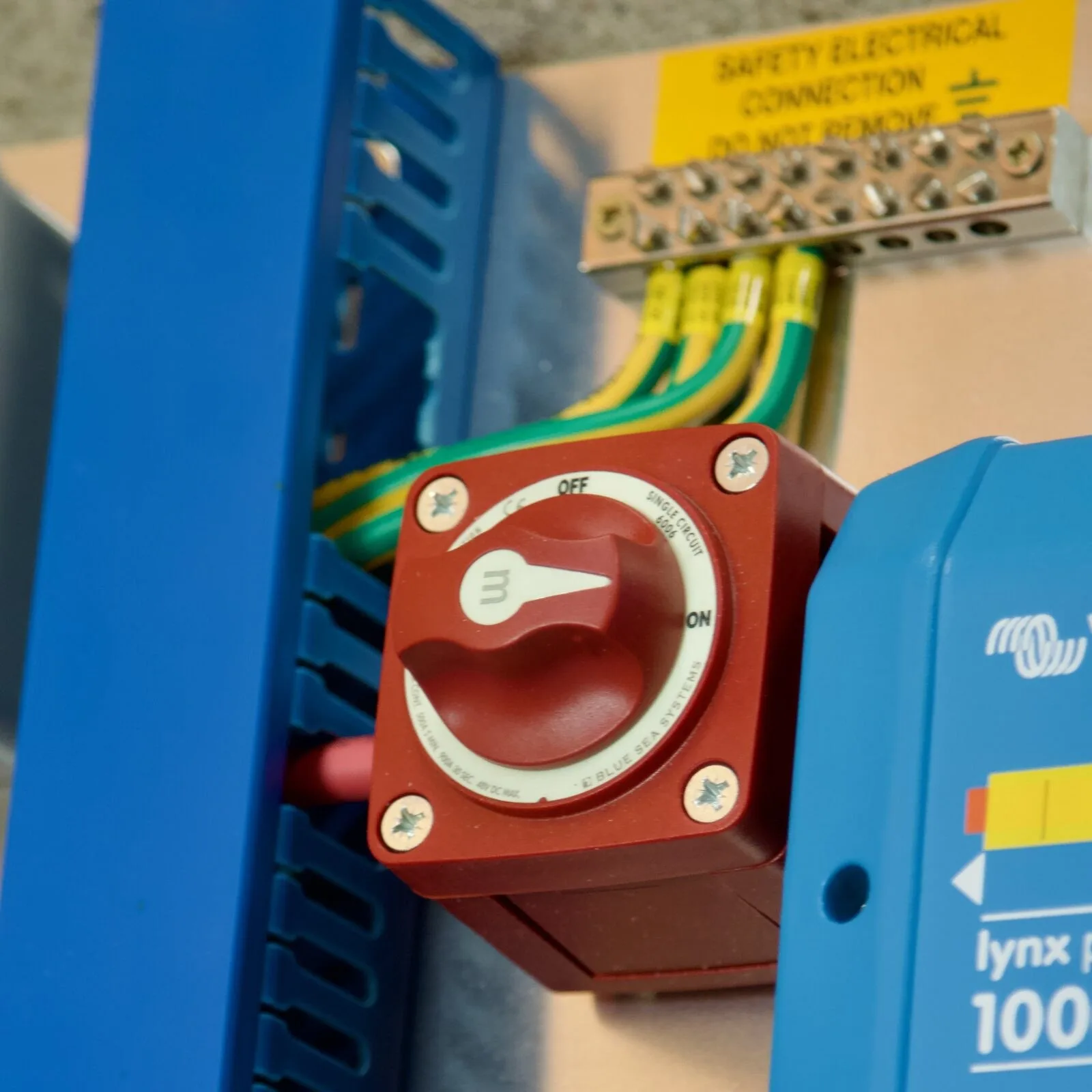
To shut a van down, Victron’s guidance is to use a battery switch, pull the battery fuse or disconnect the battery positive, once it’s well charged. Then look for anything wired on the battery side of the switch.
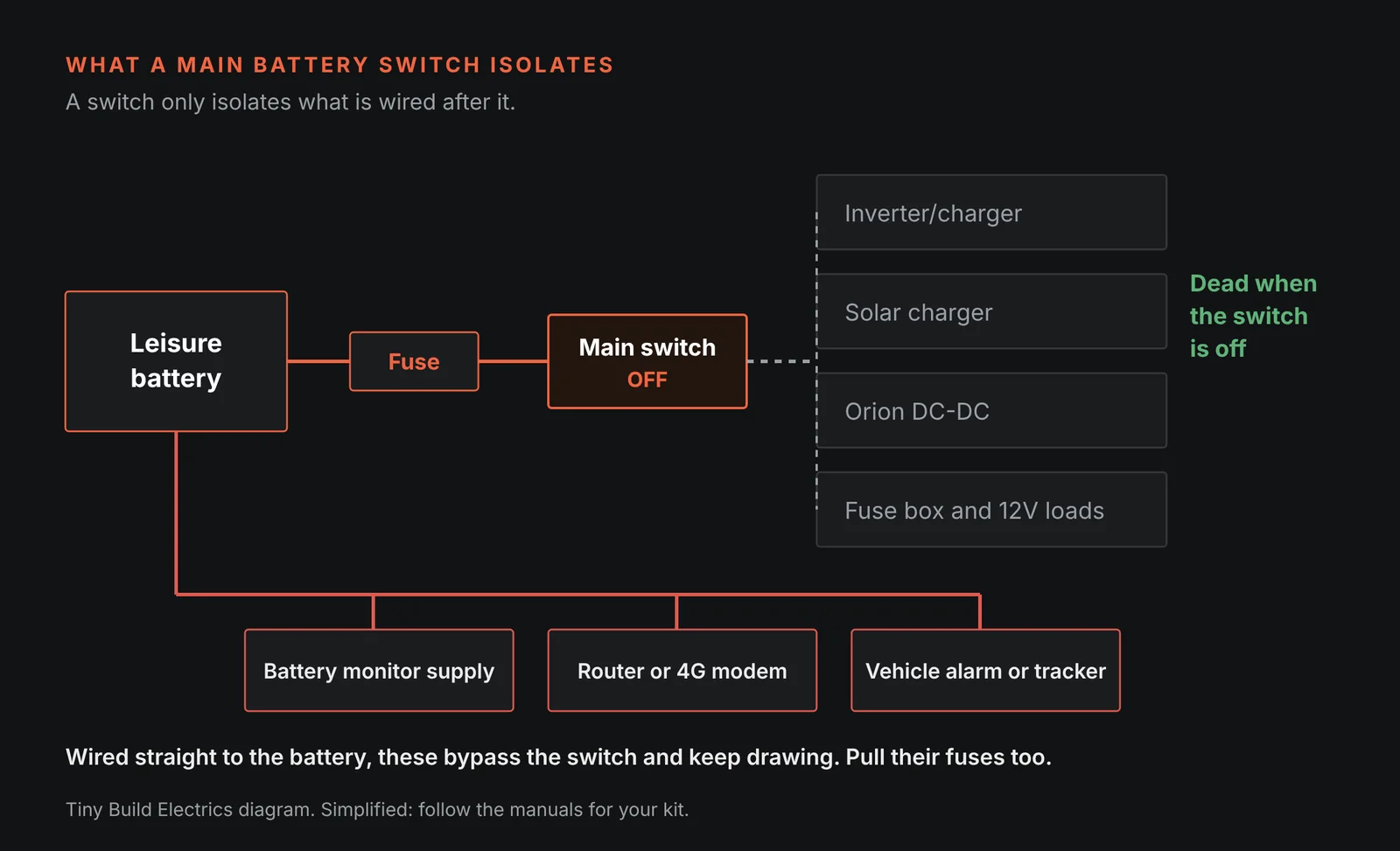
The battery monitor is the usual one. With a Victron Lithium Smart battery, Victron prefers it powered from the BMS’s load disconnect terminal, so it switches off with the loads. Powering it straight from the battery suits only low-draw monitors such as the SmartShunt or BMV-712, on banks over 200Ah, and it then keeps drawing after the BMS has turned the loads off.
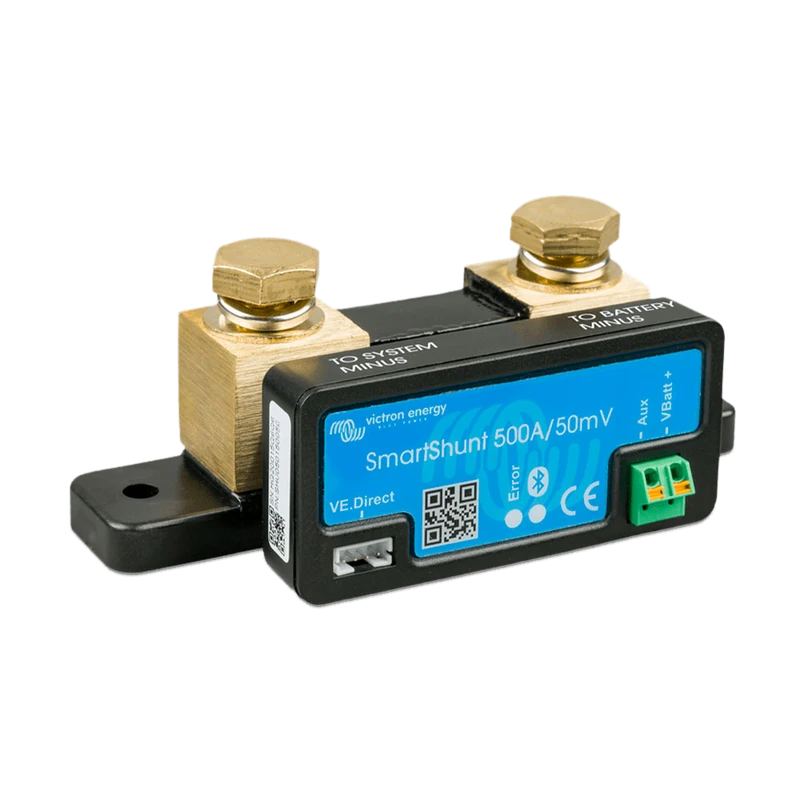
Our guide to battery monitoring explains where the shunt sits.
Shore power and solar over winter
Leaving a van on hook-up or solar is fine for a lithium battery, as long as the chargers stop in the cold and the settings suit a battery that isn’t being used. Not all campervans need hook-up all winter. One with electric heating does, and a heated battery only warms and charges while a charger is supplying it.
Float and storage settings. For a Fogstar Drift, use Fogstar’s figures above. For its 12.8V Lithium Smart batteries, Victron recommends 14.2V absorption for two hours, then 13.5V float. Lithium doesn’t need a storage mode, but if a charger has one, set it to the float value. Turn temperature compensation off. Settings and firmware are visible in VictronConnect, and in VRM if you have a GX device.
Holding the battery below full on hook-up. On MultiPlus and Quattro models that support it, Victron’s Solar & Wind Priority uses shore power only to stop the battery going too low, and lets solar do the charging. Victron’s sustain voltage for lithium is 13.0V on a 12V system, a minimum state of charge of about 30%. Sustain lasts seven days by default, set by the repeated absorption interval; after that it charges the battery full and keeps it there.
Should you leave the chargers on? Yes, if they can’t charge in the cold and you’ll know if the hook-up drops. For months on end, that means a storage site pitch or a dedicated electric hookup for campervan use at home, not an ordinary house socket. If you can’t check on the van, shut it down instead.
Solar. Winter solar yield is low, and a sunny frosty morning is exactly when the cut-off has to work. If you’re shutting down, switch the solar charger off too.
Monitoring campervan electrics over winter with VRM
With a GX device online, the VRM portal can watch the van for you. Victron’s VRM manual describes:
- Automatic alarm monitoring of set parameters, such as low state of charge on a battery monitor and VE.Bus alarms.
- Alarm rules you set for any logged value. A low state of charge or low voltage rule is the obvious one for winter.
- A mains failure alarm, so you hear when the hook-up drops.
- Communication monitoring, when the van stops sending data, and Geofence, if it leaves its spot.
A Fogstar Drift PRO or Drift Gen2 can report to a Cerbo GX MK3 over CAN, so VRM sees the battery’s own voltage, state of charge, temperatures and BMS alarms. For an original Drift, Fogstar points owners who want this to the Drift PRO.
The trade-off is power. A Cerbo GX MK3 draws 2.8W at 12V, plus the router, so remote monitoring belongs with the kept-charged option. On a van that’s shut down, check it in VictronConnect when you visit.
Which socket is safe for home hook up?
The socket. Use a weatherproof outdoor socket protected by a 30mA RCD, which BS 7671 requires for socket-outlets up to 32A. An extension lead through a window isn’t a safe substitute. Fully unroll the campervan hook up cable and check the plug, hook up cable and inlet for damage. Inside the van, Section 721 requires a 30mA RCD breaking all live conductors: see our guide to choosing the right RCD.
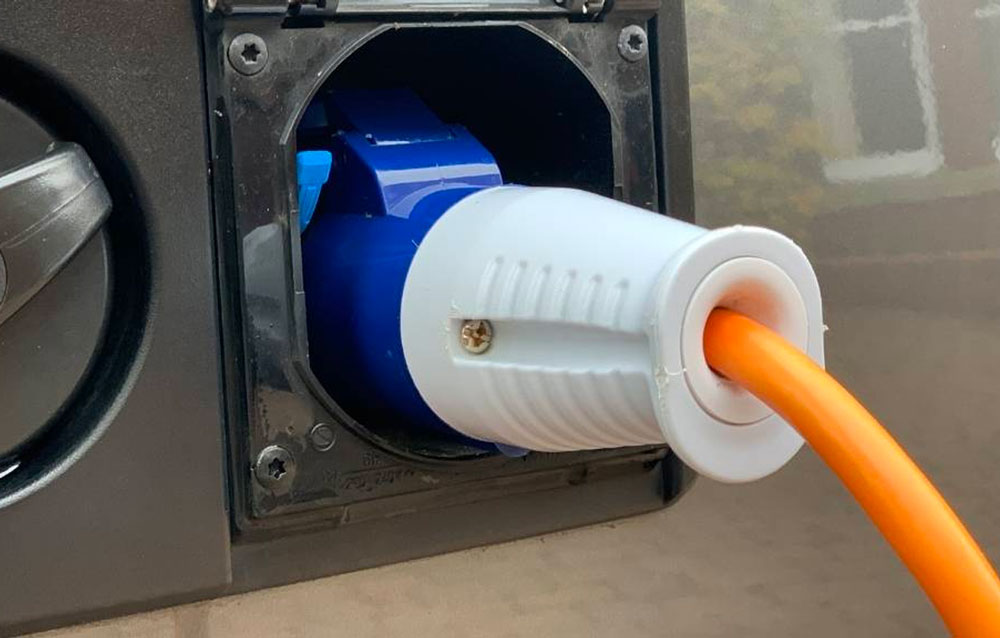
The PME earthing risk
The earthing risk. Most UK homes have a PME supply, TN-C-S in BS 7671 terms, where the supplier’s neutral and earth share one conductor in the street, the PEN conductor. If it breaks, the house’s earthing terminal can rise to a dangerous voltage. A van on hook-up has its chassis connected to that earth, so its metalwork can become live relative to the ground you’re standing on.
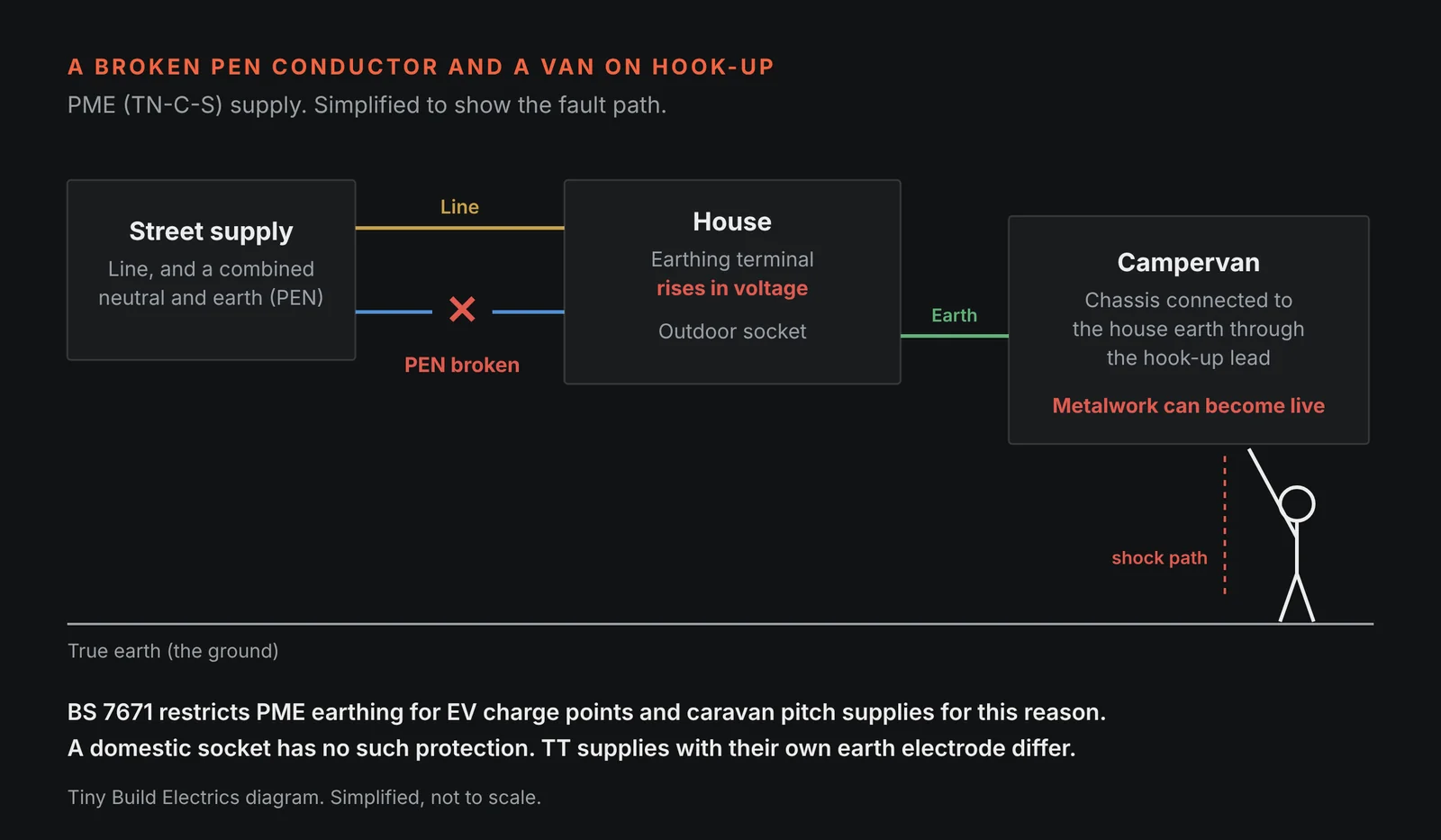
That’s why BS 7671 restricts using a PME earthing terminal for electric vehicle charge points and caravan pitch supplies, and why the IET notes that the Electricity Safety, Quality and Continuity Regulations prohibit connecting a PME earth to a caravan’s metalwork. A domestic socket has no such protection. The risk is rare, so plugging in now and then is reasonable with care, but a van on hook-up all winter is exposed to it for months. Rural homes are often on a TT supply with their own earth electrode.
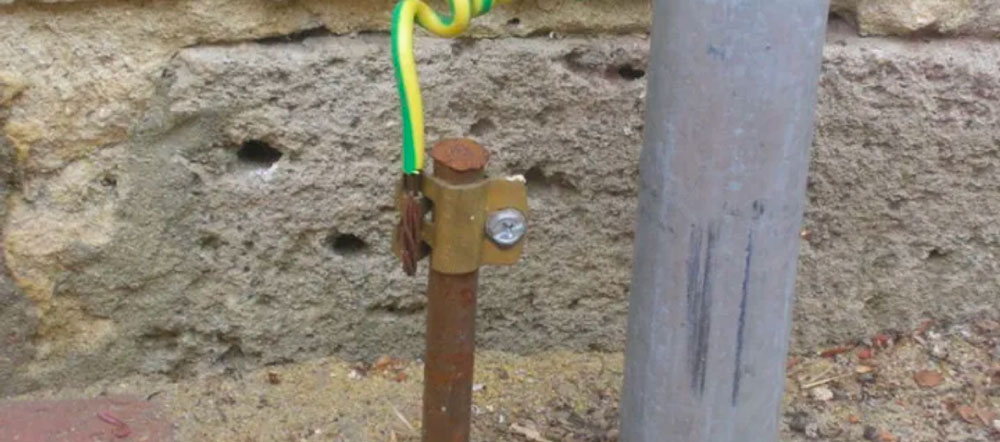
If you plug in regularly or want the van on hook-up for months, have an electrician check how your house is earthed and fit a dedicated outdoor supply. Our guide to earthing and bonding a campervan covers the van’s side.
What does an AGM leisure battery or starter battery need in winter?
An AGM leisure battery is a sealed lead-acid battery with its electrolyte held in absorbent glass mat (AGM) separators, so it can’t spill and needs no topping up. Winterising campervan electrics with one is simple: keep it full, like any lead-acid battery. Victron’s AGM and gel datasheet puts self-discharge under 2% a month at 20°C, doubling for every 10°C warmer, so kept cool they can be stored for up to a year without recharging. Repeated deep discharges shorten their life, so don’t let one sit flat.
On hook-up, a charger with a storage mode suits them: a lower voltage after a day of float to reduce plate corrosion, with a short refresh each week. Unlike lithium, they need temperature compensation in the cold. Victron recommends -4mV per cell per °C for its VRLA batteries below 10°C.
Starter batteries. The vehicle’s electronics, alarm and tracker draw from the starter battery all the time. Give it a proper drive or a charger every few weeks. With an Orion XS, our guide to Orion XS reverse charging shows how to charge a flat starter battery from the leisure battery.
Campervan electrics: damp, condensation and connections
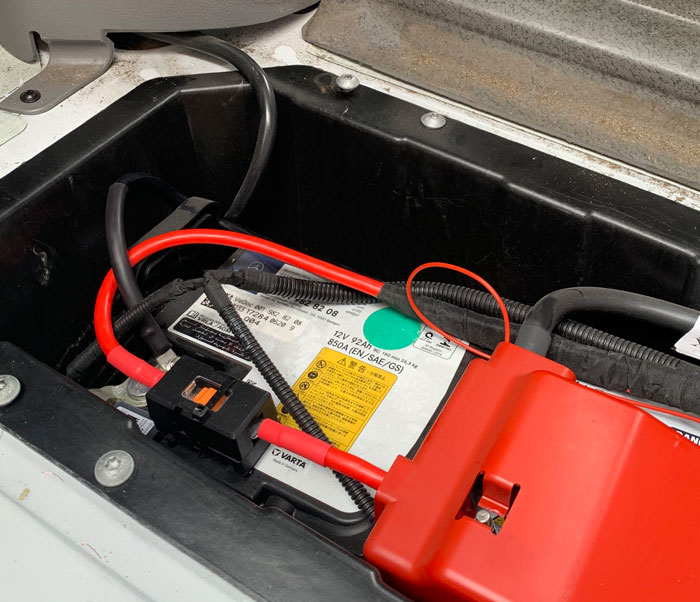
A cold, closed van gets damp, and damp finds its way into connections.
- Ventilate, or run a dehumidifier on hook-up from an RCD-protected socket.
- Victron rates its Lithium Smart batteries for up to 95% humidity, non-condensing, so keep condensation off the terminals.
- Check terminals, the hook-up inlet and underbody connections for corrosion before and after winter.
Winterising campervan electrics: your checklist
- Decide: kept charged, or shut down.
- Charge the campervan leisure battery to its maker’s storage level: 30 to 50% for a Fogstar, almost full for a Victron Lithium Smart.
- Check that charging stops in the cold, through the battery’s BMS, the chargers’ low-temperature cut-off, or both.
- Switch off the inverter, or use search mode, and turn off anything you don’t need.
- If you’re shutting down, switch the solar charger off first, then open the main switch or pull the battery fuse, and disconnect anything that bypasses the switch.
- If you’re staying on hook-up, use an RCD-protected outdoor socket and set a VRM alarm for low state of charge and mains failure.
- Look after the starter battery as well.
- Check the van every few weeks, or after a cold snap.
How we set vans up for winter at Witherslack
Every system we fit at our Witherslack workshop is configured, tested and commissioned before handover, with winter in mind: charge voltages to suit the battery, low-temperature protection with a real temperature to work from, and a main switch that isolates what it should. Settings and firmware are visible in VictronConnect and VRM, and we check them at handover.
If you’ve built your own system, or bought a kit anywhere, our campervan inspection and testing checks the installation and gives you a written report. It isn’t a guaranteed pass: we assess the van on the day and quote any remedial work after that.
We’re now booking installs from February 2027.
Winterising campervan electrics FAQs
Should I leave my campervan plugged in all winter?
On a proper hook-up point, such as a storage site pitch or a dedicated supply at home, yes, if charging stops when the battery is too cold and you’ll know if the hook-up drops. Switch off loads you don’t need and set a low battery alarm if you have VRM. An ordinary house socket is for top-ups, not the whole winter. If you can’t check on the van, charging it and shutting it down is safer.
What charge should a lithium leisure battery be stored at over winter?
Follow your battery maker. Fogstar recommends 30 to 50%, aiming for about 50%, recharged at least every three months and sooner if it drops below 30%. Victron says to store its Lithium Smart batteries almost full before disconnecting them. Either way, make sure nothing can draw the battery down to empty while it sits.
Can a lithium leisure battery freeze in a UK winter?
Not in UK weather, but frost matters. Fogstar rates storage from 0°C on a Drift PRO and 10°C on a Drift or Drift ECO, so lay a Fogstar up somewhere sheltered. Victron rates its Lithium Smart for storage from -45°C. Charging is the hard limit: Fogstar’s BMS stops it at 0°C, Victron’s below 5°C.
Do I need a heated lithium battery in the UK?
Only if you want to charge in freezing weather, such as on ski trips. For a van parked over winter, low-temperature protection is enough, as charging waits until the battery warms up. Fogstar’s Drift and Drift PRO have heaters that run from the incoming charge; otherwise a thermostat-controlled heat pad does the job.
Will a SmartShunt drain my battery over winter?
Barely. Victron rates the SmartShunt at under 1mA, a few hundredths of an amp hour a day. But if it’s wired straight to the battery it never switches off, even after the BMS has disconnected the loads. Over a long lay-up, that can finish off a battery that’s already low.
Do campervans need electric hook up over winter?
No. A van with a lithium leisure battery can be charged to its storage level and shut down until spring, with a check every few weeks. Campervans need electric hook up over winter only if you’re using the van, running electric heating or relying on a heated battery, which warms only while a charger supplies it.
Are lithium leisure batteries safe in the cold?
Yes, if charging stops in the cold. Not all leisure batteries are lithium, and the lithium ones in vans are almost always LiFePO4, which Victron’s manual calls the safest of the mainstream lithium battery types. Cold doesn’t make them dangerous, but charging below the limit damages the cells. Fogstar’s BMS stops charging at 0°C, Victron’s below 5°C.
Is it safe to plug my van into a house socket?
Yes, now and then, with care. Most UK homes are on a PME (TN-C-S) supply. If the combined neutral and earth conductor in the street breaks, the house earth can rise in voltage and the van’s metalwork rises with it, which is why the regulations bar connecting a caravan’s metalwork to a PME earth. The fault is rare, so the aim is to keep your exposure short.
Use an outdoor socket protected by a 30mA RCD and a proper outdoor-rated hook-up lead, fully unrolled. Don’t leave the van plugged in unattended for long spells. In wet weather, if anything seems off, such as a tingle from the bodywork, don’t touch the van while you’re standing on the ground: switch off at the socket first. If you plug in regularly, have an electrician fit a dedicated outdoor hook-up point with protection against a broken PEN conductor, on the same principle as a caravan pitch or EV charge point.
Sources
Fogstar sources
- Fogstar, Drift range user manual (2026): heating activation logic and 0.5A minimum charge current, storage at 30 to 50% with a recharge every three months, discharge control and isolation, Drift Gen2 Cerbo GX connection. www.fogstar.co.uk
- Fogstar, specification sheets for the Drift PRO 628Ah (storage 0 to 35°C), Drift 100Ah and Drift ECO 460Ah (storage 10 to 35°C at 50% state of charge). www.fogstar.co.uk
- Fogstar, Winter Care for Fogstar Lithium Leisure Batteries (1 December 2025): heated Drift and PRO charging, Drift ECO under-temperature protection, storage at about 50%, storage in a sheltered spot that doesn't freeze, isolation, two-to-three-monthly checks and slow charging in the cold. www.fogstar.co.uk
- Fogstar, Knowledge Hub: Drift and Drift PRO heating (0°C cut-off, 5°C resume, 36W pads), low-temperature discharge cut-off, storage at 30 to 50%, over-discharge at 11.6V and 7V, Victron charger settings, Drift ECO heating and Drift PRO Cerbo GX integration. www.fogstar.co.uk
- Fogstar, Drift Q&As: heater operation and app battery alerts. www.fogstar.co.uk
Victron and BS 7671 sources
- Victron Energy, Lithium Smart Battery manual: LiFePO4 as the safest mainstream lithium type (2.1), Allowed-To-Charge minimum temperature (4.7.3), Allowed-To-Discharge cell voltage (4.7.5), battery monitoring (3.5), charger settings, discharging (5.3), operating conditions (5.4) and battery care (5.5). www.victronenergy.com
- Victron Energy, 12.8V and 25.6V Lithium Smart battery datasheet: operating and storage temperatures, maximum storage time and humidity. www.victronenergy.com
- Victron Energy, SmartSolar MPPT manual, configuration and settings: low temperature cut-off and VE.Smart networking. www.victronenergy.com
- Victron Energy, Orion XS 12/12-50A manual: low temperature cut-off and current consumption. www.victronenergy.com
- Victron Energy, SmartShunt manual: technical data and low temperature alarm. www.victronenergy.com
- Victron Energy, MultiPlus-II inverter/charger datasheet: zero load power and search mode. www.victronenergy.com
- Victron Energy, Cerbo GX MK3 manual: temperature relay and heating control for batteries (9.4). www.victronenergy.com
- Victron Energy, Cerbo GX MK3 product page: Cerbo GX MK3 (BPP900451130) power draw at 12V, with and without GX Touch. www.victronenergy.com
- Victron Energy, Solar & Wind Priority: introduction (seven days in Sustain) and configuration (sustain voltage). www.victronenergy.com
- Victron Energy, VRM Portal manual: alarms and monitoring (6). www.victronenergy.com
- Victron Energy, GEL and AGM batteries datasheet: AGM construction (absorbent glass mat, maintenance free), self-discharge, storage mode and temperature compensation. www.victronenergy.com
- IET, Electrical installations in caravan/camping parks, caravans and motor caravans: PME and ESQCR, RCDs in the vehicle and at the pitch. electrical.theiet.org
- IET, BS 7671:2018+A4:2026: Regulation 411.3.3 (additional protection for socket-outlets), Section 708 (caravan parks), Section 721 (caravans and motor caravans) and Section 722 (electric vehicle charging). electrical.theiet.org
About the reviewer: Tom Alderdice
Tom holds the 18th Edition (BS 7671) and inspection and testing qualifications, plus NCC training in caravan and motorhome electrics.
Tiny Build Electrics is an Authorised Victron Energy Installer. See Tom’s full qualifications